Neither homeschooling nor public schooling holds a universal safety advantage. The safer choice depends entirely on which specific risks matter most to your family: physical security, health exposure, emotional wellbeing, or academic oversight.
Public schools in New York operate under mandatory safety protocols, building codes, and professional oversight that many parents find reassuring. Homeschooling offers direct parental control over physical environment, social interactions, and health exposures, but transfers the responsibility for safety entirely to the family. For parents in urban settings looking to make urban homeschooling work understanding these tradeoffs becomes especially important when navigating crowded neighborhoods and busy schedules.
This comparison breaks down safety across four dimensions: physical security (including violence and accidents), health and medical considerations, social and emotional wellbeing, and educational oversight. You’ll find data-driven insights on where each option excels and where vulnerabilities exist, because honest safety evaluation requires looking at more than headlines.
The reality? Some families will find homeschooling dramatically safer for their particular child. Others will conclude that public school’s structured environment, trained staff, and regulatory framework provides superior protection. Your answer lies in matching safety priorities to your child’s needs, your family’s capacity, and the specific schools or homeschool community available to you in 2026. We’ll help you identify which safety profile fits your situation, with practical guidance for New York families weighing this decision right now.
Safety at a Glance: Homeschooling vs. Public Schooling
Both homeschooling and public schooling offer distinct safety advantages, but they protect children in fundamentally different ways. The table below outlines the core safety dimensions parents need to weigh when making this decision:
| Safety Dimension | Homeschooling Approach | Public Schooling Approach | Key Trade-Off |
|---|---|---|---|
| Physical Security | Controlled home environment eliminates school violence exposure | Institutional protocols like security personnel and visitor screening | Environmental control vs. professional security infrastructure |
| Health & Wellness | Reduced illness exposure; full control over food, allergens, and medical needs | School nurses, vaccination tracking, accessibility services, food programs | Disease prevention vs. professional health monitoring |
| Social-Emotional Safety | Parent oversight of peer interactions; protection from bullying and negative influences | Counseling services, diverse peer exposure, daily social skill development | Selective socialization vs. institutional support systems |
| Regulatory Oversight | Parent accountability under NY homeschool law; family autonomy in educational decisions | Multiple layers of professional oversight, mandated reporting, background-checked staff | Family control vs. external accountability |
For urban New York families, these safety considerations take on additional complexity. Homeschooling in apartment settings requires thoughtfulness about designing a homeschool classroom that’s physically safe and conducive to learning, while public school families navigate crowded buildings and longer commutes that introduce their own safety variables.
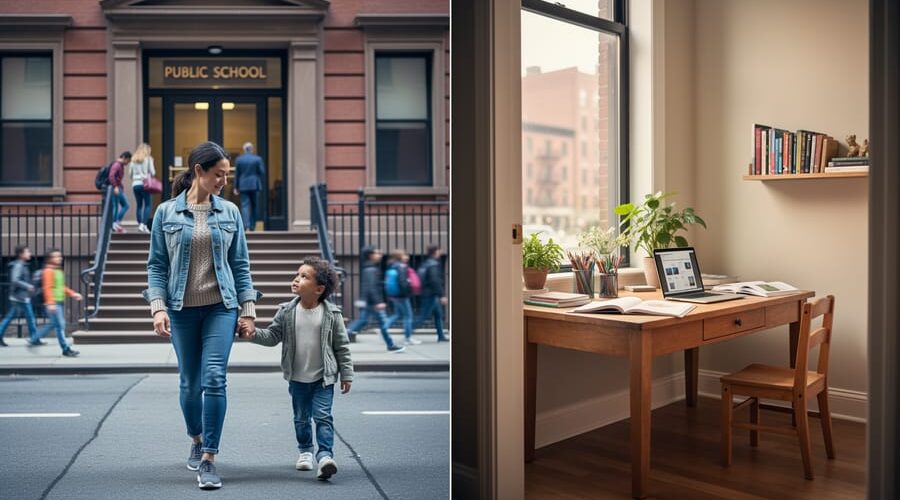
Neither option provides universal safety superiority. Homeschooling excels at environmental control and health management, while public schools offer structured oversight and professional intervention systems. The right choice depends on your child’s specific vulnerabilities, your family’s capacity to provide safety measures, and which risks concern you most.
Understanding Each Educational Approach
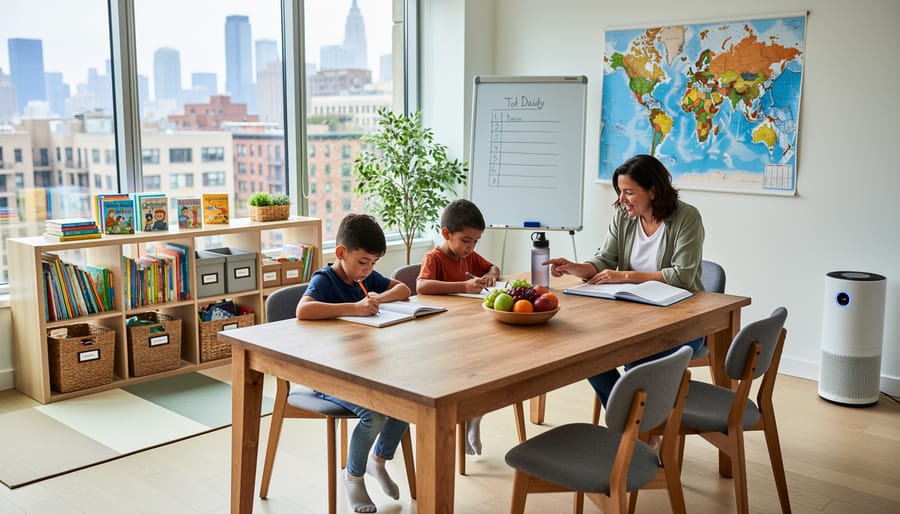
What Homeschooling Is in Practice
Homeschooling means parents take direct responsibility for their children’s education at home rather than sending them to a traditional school building. In New York, families who choose this path become their child’s primary teacher, selecting curriculum, setting the daily schedule, and designing learning experiences tailored to their child’s needs and pace.
The practical reality looks different in every household. Some families follow structured textbook programs that mirror traditional school subjects. Others take a more flexible approach, weaving learning into daily life through projects, field trips, and real-world experiences. Many urban New York homeschoolers blend both methods, using their city’s museums, libraries, and cultural resources as extended classrooms.
New York requires parents to file a written notice of intent with their local school district, submit an Individualized Home Instruction Plan outlining subjects and materials, and provide quarterly reports and annual assessments. Parents must teach required subjects including math, reading, science, and social studies, but they control how and when these subjects are taught.
Unlike public schools with fixed bell schedules and standardized lessons, homeschooling operates on the family’s terms. Parents decide the learning environment, the pace of instruction, who their children interact with during school hours, and how to address their specific educational and developmental needs.
What Public Schooling Entails
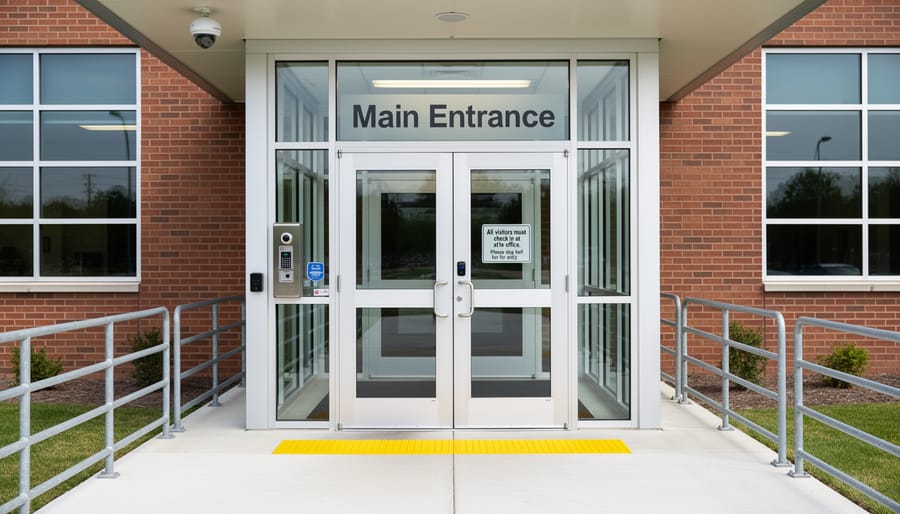
Public schooling in New York means children attend state-funded institutions where certified teachers deliver standardized curriculum to groups of students, typically 20-30 per classroom. Students follow fixed schedules, moving between subjects and grade levels according to age-based placement. The New York State Education Department sets learning standards, testing requirements, and graduation benchmarks that all public schools must meet.
In urban settings like New York City, public schools operate within larger district systems with multiple administrative layers, building principals, district superintendents, and central boards of education. These institutions employ professional staff including counselors, nurses, security personnel, and specialists for students with disabilities or language needs. Schools must comply with extensive regulations covering everything from building codes to teacher certification to special education services.
Public schools provide structured environments with established routines: bus transportation, cafeteria meals, library access, and organized activities beyond academics. Students interact daily with diverse peers from different backgrounds, supervised by adults who’ve undergone background checks and professional training. The institutional framework means multiple adults observe each child regularly, creating built-in accountability but also limiting parental control over daily experiences.
This model offers consistency and professional oversight, but it also means families accept predetermined structures, exposure to large groups, and institutional decision-making about their child’s day-to-day environment and safety protocols.
Physical Safety: Environment and Security Concerns
Homeschooling’s Controlled Environment
Home-based education removes children from environments where institutional violence occurs. Parents control who enters the learning space, eliminating stranger danger and reducing vulnerability to incidents ranging from fights to more serious threats. There’s no cafeteria altercation, no hallway confrontation, no lockdown drill that becomes reality.
The absence of large crowds matters especially in urban settings. New York City public schools pack hundreds or thousands of students into buildings daily. Homeschooled children avoid the chaos of crowded hallways, lunch periods with minimal supervision, and the statistical reality that more bodies create more opportunities for conflict.
Security gaps that plague institutional settings, propped-open doors, overwhelmed front desks, blind spots in stairwells, simply don’t exist in a home environment. Parents know exactly who’s present. In an apartment building, access control happens at the building entrance, then again at your door. Community spaces like libraries and museums used for educational outings have their own security but don’t concentrate hundreds of children in one location daily.
Urban homeschooling does require different safety thinking. Apartment safety means securing windows, managing tight spaces, and ensuring fire escape access. Sidewalk navigation, subway platforms, and public parks demand street-smart supervision rather than institutional protocols. But these risks are present in daily urban life regardless, homeschooling simply means parents maintain direct oversight rather than delegating that responsibility to school staff managing dozens of children simultaneously.
Public School Security Measures
New York public schools employ layered security protocols designed to protect students within institutional settings. Most schools use controlled entry systems requiring visitors to check in at main offices, present identification, and receive visitor badges before accessing hallways or classrooms. Many buildings have stationed security personnel, school safety agents in New York City public schools or resource officers in suburban districts, who monitor entrances and patrol during arrival, dismissal, and lunch periods.
Schools maintain emergency response plans covering lockdowns, evacuations, and shelter-in-place scenarios. Staff receive regular training on these procedures, and students participate in drills throughout the year. Communication systems allow instant alerts across classrooms when threats arise. New York City schools specifically deploy metal detectors in certain buildings and conduct random scanning at others, particularly at high schools.
Yet institutional settings create inherent limitations. Large student populations mean individual children receive less personalized monitoring than at home. Bullying, fights, and conflicts occur despite supervision, staff cannot observe every interaction in crowded hallways, bathrooms, or cafeterias. Security measures sometimes fail: unauthorized individuals occasionally enter buildings, and emergency drills don’t eliminate all risks during actual incidents.
The standardized approach also means families cannot customize security to their child’s specific vulnerabilities. A student with anxiety about lockdown drills, for instance, must participate regardless. While professional oversight offers structure and accountability, it operates within the constraints of managing hundreds or thousands of students simultaneously rather than focusing on one child’s particular safety needs.
Health and Wellness Considerations
Disease Exposure and Health Management at Home
Homeschooling virtually eliminates the concentrated disease exposure inherent to crowded classrooms. When 25-30 children share enclosed spaces for six hours daily, respiratory illnesses, stomach bugs, and viral infections spread rapidly regardless of hygiene protocols. At home, your child encounters far fewer people in close quarters, dramatically reducing infection risk, especially valuable for immunocompromised children or those with chronic health conditions requiring careful infection control.
You control every aspect of your child’s health environment. If your child has severe food allergies, you eliminate cross-contamination risks from cafeterias and snack-sharing. Medication schedules happen precisely when needed, without relying on school nurses or administrative delays. Children recovering from illness can ease back into learning without exposure to new pathogens, and you can adjust the day’s intensity based on real-time health observations rather than predetermined schedules.
This controlled environment extends beyond home. When planning homeschool field trips or co-op activities, you choose exposure levels that match your family’s health priorities and your child’s specific vulnerabilities. Parents of children with asthma, diabetes, or autoimmune conditions particularly value this medical autonomy, you’re not navigating institutional policies or hoping staff members remember specialized health protocols. You’re the constant health monitor, making informed decisions throughout each day.
Public School Health Infrastructure
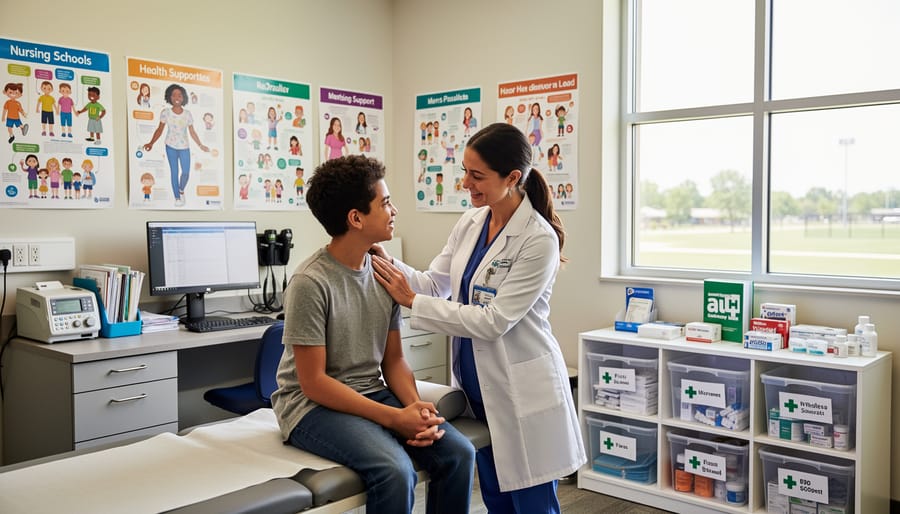
New York public schools maintain structured health infrastructure that homeschooling families must replicate independently. Most schools employ licensed nurses who handle medication administration, emergency care, and chronic condition management during school hours. They coordinate with parents on action plans for conditions like asthma, diabetes, and severe allergies, providing professional monitoring that many working parents can’t deliver themselves.
Vaccination requirements create baseline immunity levels within school populations, reducing outbreak risks for preventable diseases. Schools track immunization records and enforce state mandates, though medical and religious exemptions remain available under New York law.
Food programs serve breakfast and lunch meeting USDA nutritional standards, ensuring consistent access to balanced meals regardless of home circumstances. Schools accommodate food allergies through documented plans and separate preparation areas, though cross-contamination risks persist in cafeteria settings.
Accessibility services include physical accommodations, assistive technology, and trained paraprofessionals for students with disabilities. Schools provide equipment and expertise that would cost families thousands to replicate privately.
The trade-off arrives through increased illness exposure. Classrooms concentrate 20-30 children in shared air for six hours daily. Respiratory infections, stomach bugs, and seasonal flu circulate rapidly despite cleaning protocols. Schools send sick children home, but transmission often occurs before symptoms appear. Parents choosing public education accept this elevated exposure as the cost of professional health infrastructure and supervised care.
Social-Emotional Safety and Wellbeing
Homeschooling’s Social Environment
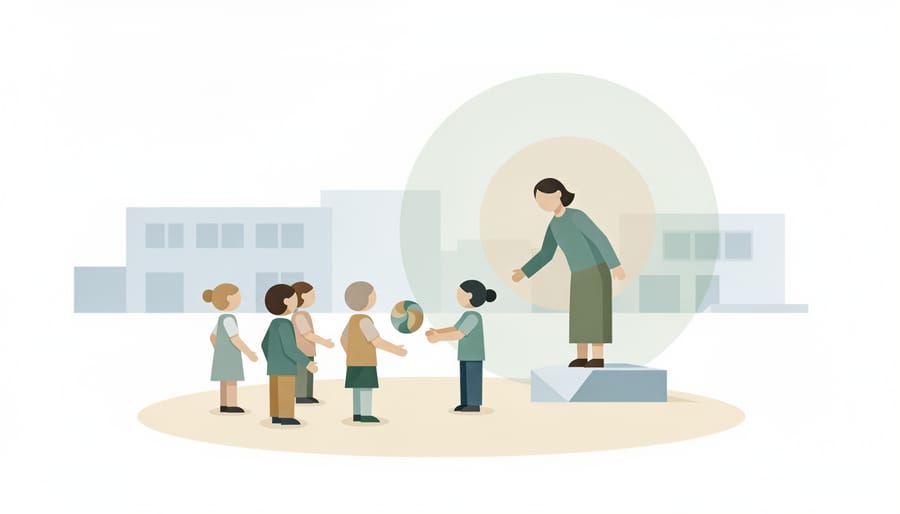
Homeschooling parents control who their children interact with and when those interactions happen. You choose playmates, select co-op groups, and screen social activities based on your family’s values and your child’s readiness. This selective approach shields children from bullying, peer pressure, and negative influences that pervade many public school hallways. Your child won’t face daily exposure to aggression, exclusion, or harmful social hierarchies during formative learning hours.
This protective environment offers genuine emotional safety for vulnerable children, those who’ve experienced bullying, have anxiety disorders, or struggle with social overwhelm. Homeschooled children typically interact with mixed-age groups rather than age-segregated classrooms, often developing stronger mentor relationships with older peers and nurturing skills with younger ones.
The isolation concern is real but manageable, especially in New York’s urban landscape. Homeschoolers aren’t confined to their apartments. Brooklyn and Queens have thriving co-op networks where families meet weekly for group classes, field trips, and structured social time. Manhattan homeschoolers access museum programs, park meetups, and organized activities. The Bronx Homeschool Network coordinates regular gatherings. These aren’t random playgrounds, they’re communities of families who’ve chosen similar educational paths.
Isolation becomes a problem when parents don’t actively build social opportunities. Homeschooling requires intentional socialization planning. You must seek out sports leagues, art classes, religious youth groups, or neighborhood friendships. The safety advantage comes from curating these experiences rather than leaving social development to institutional chance, but it demands parental effort and urban resourcefulness.
Public School Social Dynamics
Public schools immerse children in diverse peer groups from varied socioeconomic, cultural, and educational backgrounds, an environment that builds real-world social competence through daily negotiation, conflict resolution, and collaboration. Students learn to navigate group dynamics, read social cues, and adapt to different personalities organically, skills that develop through repeated exposure rather than structured lessons.
Most New York public schools employ counselors, social workers, and psychologists who provide crisis intervention, ongoing mental health support, and group programs addressing anxiety, grief, or behavioral challenges. These professionals are trained to identify signs of abuse, suicidal ideation, or severe emotional distress, issues a parent might miss or feel unequipped to handle alone. Students can access this support independently, creating a safety net beyond family resources.
However, this same peer environment introduces bullying risks ranging from verbal harassment to physical intimidation and cyberbullying that extends beyond school hours. While schools implement anti-bullying policies and intervention protocols, enforcement varies by building, staff vigilance, and administrative follow-through. Crowded hallways, unsupervised transitions, and bathroom spaces create opportunities for negative interactions despite institutional oversight.
The constant social pressure and comparison inherent in large groups can elevate stress for sensitive or non-conforming children. Yet for many students, these challenges build resilience, self-advocacy skills, and the ability to seek help from trusted adults, competencies that serve them through adolescence and adulthood when parents cannot intervene directly.
Oversight, Accountability, and Educational Safety
Educational oversight differs fundamentally between homeschooling and public schooling, creating distinct accountability structures that affect children’s safety and wellbeing. Public schools operate under extensive regulatory frameworks with multiple layers of institutional accountability, while homeschooling relies primarily on parental responsibility with basic state compliance requirements.
Regulatory Framework and Compliance
New York homeschool families must meet specific legal requirements that establish baseline educational accountability:
- Letter of Intent
- Annual notification to the local school district declaring your intent to homeschool, submitted at the start of each school year. This creates a documented record that your child is receiving instruction outside the public system.
- Individualized Home Instruction Plan (IHIP)
- A detailed curriculum plan submitted to the district outlining subjects, materials, and learning objectives for the year. Districts review these plans to ensure coverage of required subjects at appropriate grade levels.
- Quarterly Reports
- Regular progress updates submitted four times per year documenting attendance, subjects covered, and activities completed. These reports maintain ongoing accountability throughout the school year.
- Annual Assessments
- Yearly evaluation through standardized testing or narrative assessment demonstrating educational progress. Students must score above the 33rd percentile on approved tests or receive satisfactory written evaluations from certified teachers.
- District Review Process
- Local school officials assess compliance with state regulations and can intervene if educational requirements aren’t met. However, New York law doesn’t mandate home visits or allow curriculum rejection based on teaching methods.
Public schools face considerably more oversight including state curriculum standards, teacher certification requirements, building safety inspections, and mandatory reporting protocols for suspected abuse or neglect. All school personnel undergo background checks and fingerprinting, protections absent in homeschooling where parents have sole responsibility for selecting any tutors or co-op instructors.
This creates a trade-off: public schools offer professional oversight and mandated reporting systems that catch educational neglect and abuse, while homeschooling provides parental autonomy with minimal external monitoring. For families concerned about institutional failures to protect children, homeschooling offers direct control. For those worried about lack of external accountability, public school systems provide multiple checkpoints and professional observers who interact with children daily.
Who Should Choose Homeschooling for Safety Reasons
Homeschooling’s safety advantages become most compelling for specific family situations where the controlled environment offers protection that institutional settings cannot match.
Children with serious health vulnerabilities top the list. Those with compromised immune systems, severe allergies, chronic conditions requiring frequent medical attention, or disabilities that make them targets for bullying often thrive in home environments where parents can monitor their wellbeing constantly and eliminate exposure risks. Parents manage medications, control food preparation completely, and adjust schedules around medical appointments without institutional barriers.
Families whose children have experienced trauma or severe bullying in school settings frequently find homeschooling provides the safe space needed for healing. A child recovering from assault, persistent harassment, or social ostracization can rebuild confidence at their own pace, away from triggers and without daily exposure to the environment where harm occurred. The emotional safety of learning without peer judgment often proves transformative.
- Children with documented anxiety disorders or sensory processing issues overwhelmed by institutional environments
- Families in temporary housing or transitional situations where school stability cannot be guaranteed
- Children who are significantly ahead or behind grade level and vulnerable to social targeting
- Students whose religious or cultural values put them at odds with mainstream peer culture
- Children with food allergies so severe that cafeteria cross-contamination poses life-threatening risks
Urban families considering this route can explore homeschool vs distance learning options to find the right structure. Parents managing these safety-focused transitions should learn to plan a field trip safely as they gradually reintroduce group learning experiences.
The common thread: families with capacity to provide direct oversight for children whose specific vulnerabilities make institutional settings genuinely unsafe rather than merely uncomfortable.
Who Should Choose Public Schooling for Safety Reasons
Public schooling’s institutional framework provides essential safety protections for families in specific circumstances, particularly where professional oversight and mandated systems fill gaps that home environments cannot reliably address.
When a child has previously experienced abuse or neglect, public school offers daily contact with trained mandated reporters, teachers, counselors, and administrators legally required to recognize and report signs of harm. This consistent external monitoring creates a protective layer that homeschooling eliminates entirely. Similarly, families navigating divorce, custody disputes, or court-ordered supervision often benefit from the structured documentation and neutral observation that schools provide.
Children with severe behavioral or mental health challenges frequently need the specialized safety protocols that trained professionals deliver. A student prone to self-harm, violent outbursts, or crisis episodes requires immediate intervention that most parents cannot safely manage alone, especially in urban apartments where space constraints limit de-escalation options. Public schools employ crisis response teams, restraint-trained staff, and on-site mental health professionals who intervene within minutes.
Public schooling’s safety infrastructure particularly serves families when:
- Parents lack the physical capacity to manage a child’s aggressive or self-injurious behaviors safely
- A student requires constant medical monitoring beyond basic first aid (specialized feeding tubes, seizure protocols, emergency medications)
- Court orders mandate regular third-party observation of the child’s wellbeing
- The home environment itself poses safety risks due to unstable housing, domestic conflict, or inadequate supervision capacity
- Parents struggle with untreated mental health or substance use issues that compromise their ability to provide consistent safe oversight
Families who recognize their own limitations, whether time, expertise, or emotional bandwidth, make the responsible safety choice by utilizing public school’s professional structures. The institutional safety net isn’t perfect, but it provides backup systems, fresh eyes, and external accountability that some children desperately need. Urban New York families have access to specialized programs, therapeutic schools, and intensive support services through the public system that would be impossible to replicate at home.
Common Questions About Homeschooling and Public School Safety
Are homeschooled children safer from violence than public school students?
Homeschooled children face virtually no risk of school shootings, large-scale violence, or institutional bullying since they learn in controlled home environments. However, this doesn’t mean they’re safer from all risks, homeschooling removes professional oversight that can detect abuse or neglect, which public school teachers are mandated to report.
How do I ensure my child’s safety while homeschooling in New York?
Create a dedicated learning space free from hazards, establish emergency protocols your child understands, maintain social connections through co-ops or activities where other adults interact with your child, and stay current with your quarterly reports and annual assessments as required by New York law. Regular engagement with other homeschooling families provides both social accountability and practical safety benefits.
What safety oversight exists for homeschoolers in New York?
New York requires homeschooling families to file an Individualized Home Instruction Plan, submit quarterly reports, and complete annual assessments, but these focus on educational progress rather than safety conditions. Unlike public schools with daily professional observation, homeschool oversight is minimal, families have substantial autonomy, which offers safety control but reduces external monitoring.
Can I safely homeschool in a small New York City apartment?
Yes, thousands of NYC families homeschool successfully in apartments by using public libraries, museums, parks, and co-op spaces for hands-on learning and physical activity. The key is establishing clear boundaries for your learning space, managing screen time intentionally, and building a routine that gets your child out of the apartment regularly for both educational and safety reasons.
Beyond these common questions, many urban parents worry about emergency preparedness when homeschooling. Unlike public schools with trained staff and established lockdown procedures, homeschooling parents need their own fire escape plans, medical emergency protocols, and clear instructions children can follow if a parent becomes incapacitated. Keep emergency contacts visible, teach your child how to call 911, and consider sharing your daily schedule with a trusted neighbor or family member.
Socialization safety concerns cut both ways. Homeschooling lets you vet every social environment your child enters, avoiding exposure to bullying or negative peer pressure that can threaten emotional wellbeing. You choose the playgrounds, activities, and co-ops based on your family’s values and safety standards. The trade-off is that your child won’t develop skills for navigating difficult social situations with institutional support, they’ll need your direct coaching for conflict resolution and relationship challenges they encounter in their selected activities.
For families concerned about whether they can provide adequate physical education safely, New York City offers numerous options. Community centers, YMCA programs, and homeschool sports leagues give children structured physical activity under trained supervision, often more specialized than what public school gym classes provide. Many urban homeschoolers find their children get more varied, safer physical education through targeted programs than they would in crowded school gymnasiums with high student-to-teacher ratios.
What Each Option Is
Before weighing safety differences, it helps to clarify what each educational approach actually means in practice.
Homeschooling is parent-directed education conducted at home or in community spaces rather than a traditional school building. Parents choose curriculum, set the daily schedule, and take direct responsibility for their child’s instruction. In New York, homeschooling operates under specific notification and assessment requirements, but families maintain significant control over educational content and methods. This model can range from structured desk work mimicking classroom learning to interest-led exploration, field trips, and one-on-one tutoring sessions.
Public schooling refers to state-funded education delivered in designated school buildings with certified teachers, standardized curricula, and institutional oversight. Students attend assigned schools based on residence, follow set schedules, and learn alongside peers in classrooms typically containing 20-30 students. New York public schools must meet state educational standards, employ licensed staff, and provide services like counseling, special education support, and meal programs. The institutional structure includes administrators, support staff, and established protocols for everything from attendance to emergency response.
Understanding these fundamental differences in structure, oversight, and daily operation sets the foundation for examining how each approach addresses safety concerns.
Safety isn’t a one-size-fits-all concept when you’re choosing between homeschooling and public schooling. Each approach protects children in different ways, and neither can claim to be universally safer across every dimension that matters to families.
Homeschooling gives you direct control over your child’s physical environment, health exposure, and daily interactions. You decide who enters your learning space, what foods are available, and how illness risks are managed. For families with children who have specific vulnerabilities, medical conditions, previous trauma, or acute sensitivities, this level of control can be genuinely protective.
Public schools, on the other hand, provide structured institutional oversight, professional monitoring, and established safety protocols. Trained staff, mandated reporting systems, and specialized support services create a safety net that operates independently of any single family’s capacity or resources. For children who need consistent external accountability or professional intervention, these institutional protections matter.
The question isn’t which option is safer in absolute terms. It’s which safety profile aligns with your child’s specific needs, your family’s capacity, and your urban reality in New York. A child thriving in a carefully curated homeschool environment isn’t more or less safe than one benefiting from a school’s counseling services and peer support, they’re experiencing different forms of protection.
Your decision should start with honest assessment: What are your child’s actual vulnerabilities? What can your family realistically provide? What does your daily urban context demand? If you’re leaning toward homeschooling in New York, NYHEN offers guidance on legal requirements, urban co-ops, and practical resources to help you build a safe, effective learning environment for your family.