
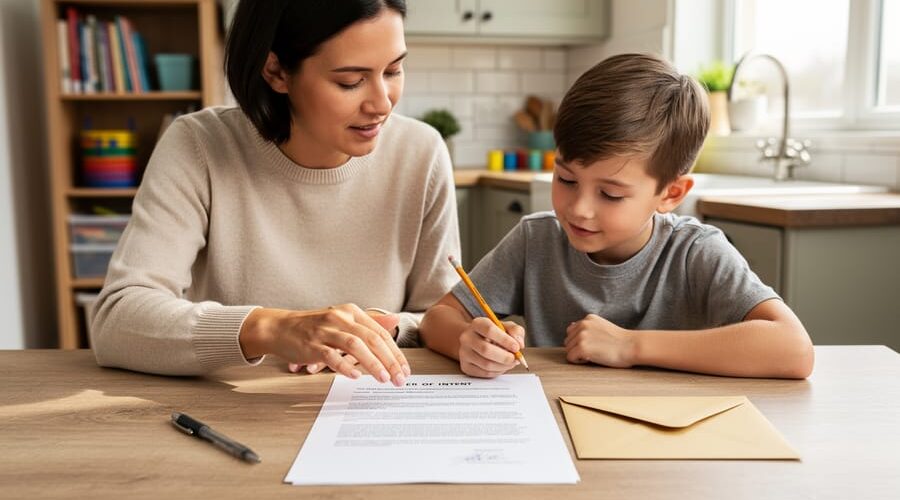
New York’s homeschool letter of intent is a simple notification you submit to your local school district superintendent announcing your plan to homeschool. You’ll complete this one-page form by including your child’s name, age, address, and the annual instruction start date, then mail or deliver it to your district office. The process takes about 15 minutes and must be submitted within 14 days after you start homeschooling or by July 1st if you’re beginning in September.
Think of this document as your official introduction to homeschooling in New York. It’s not asking for permission or approval. You’re simply informing the district that you’re taking responsibility for your child’s education at home. The state requires this notification so districts can track school-age children and ensure they’re receiving instruction somewhere, whether in public school, private school, or at home.
Many parents feel nervous about this first step, worried they’ll make a mistake or say the wrong thing. That anxiety is completely normal, but here’s the reassuring truth: the letter of intent is straightforward by design. New York homeschooling law protects your right to educate at home, and this notification is just administrative paperwork, not a test of your qualifications.
This guide will walk you through exactly what information to include, show you a proven template you can adapt, explain the timing requirements, and answer the questions that trip up most new homeschoolers. By the end, you’ll feel confident submitting your letter and moving forward with your homeschool plans.
What Exactly Is a Letter of Intent for Homeschooling?
A letter of intent is your formal way of telling your local school district, “We’re choosing to homeschool.” That’s it. It’s not an application you need approved, and you’re not asking permission. Think of it as a courtesy notice that lets your district know your child will be learning at home rather than in their classrooms.
New York State requires this notification because homeschooling is considered a legal alternative to public or private school attendance. The letter of intent purpose is straightforward: it creates a paper trail showing you’re fulfilling your responsibility to educate your child and keeps the district informed about which students are being homeschooled within their boundaries.
The letter itself is usually just one page. You’ll include basic information about your child, confirm that you’re providing instruction that meets New York’s educational standards, and indicate when you’re starting or continuing homeschooling. There’s no need for elaborate explanations of your teaching philosophy or detailed curriculum plans at this stage, those come later with your Individualized Home Instruction Plan.
Different districts might have slightly different preferences for format or delivery method, but the core content remains the same across New York State. Some districts provide their own forms, while others accept a simple letter you write yourself. Either way works fine as long as you include the required information.
The key thing to remember? This document is your first official step in the New York homeschool compliance process, but it’s genuinely one of the easiest parts. You’re simply stating your intent to educate your child at home.

Who Needs to File a Letter of Intent in New York?
If you’re homeschooling in New York, you’ll need to file a letter of intent with your local school district. But not every family follows the exact same timeline, so let’s break down who must submit this document and when.
First-time homeschoolers need to file within 14 days of starting their homeschool program. This includes families withdrawing their children from public or private school to begin homeschooling. Whether you’re pulling your child out in September or January, that 14-day clock starts ticking from your first official day of homeschooling.
Continuing homeschoolers face a different deadline. If you homeschooled last year and plan to continue, you’ll submit your letter of intent by July 1st for the upcoming school year. This annual notice tells your district you’re still homeschooling, even though they already know your family. Think of it as renewing your commitment each year.
Returning to homeschool after a break? You’re treated as a new homeschooler. If your child attended public or private school last year but you’re starting homeschool this year, you’ll follow the 14-day rule from when you begin.
There are some situations where the NY homeschool laws don’t require a letter of intent. Families using registered private schools or working through institutions classified as nonpublic schools may have different reporting requirements. Additionally, if your child has never attended public school and you’re starting homeschool before compulsory school age (which is 6 in New York), you’re not required to file until they reach that age.
The key point? If your child is of compulsory school age and you’re teaching them at home rather than sending them to a public or registered private school, you’ll need to file. When in doubt, filing is the safer choice.
When to Submit Your Letter of Intent
Timing matters with your letter of intent, but it’s more straightforward than you might think. New York has specific deadlines designed to give school districts adequate notice, and understanding these windows will keep you on the right side of compliance without stress.
If you’re starting homeschool mid-year or withdrawing your child from public or private school, you must submit your letter of intent within 14 days of beginning homeschool instruction. This countdown starts the day your child stops attending their previous school and you begin teaching at home. Don’t wait until you feel perfectly prepared, the clock is ticking from day one of homeschooling, not from when you’ve figured everything out.
For families already homeschooling who plan to continue, the deadline is July 1st each year. This annual notice tells your district you’ll be homeschooling for the upcoming school year. Mark this date on your calendar in spring, not summer, submitting in June gives you breathing room if any issues arise.
| Your Situation | When to File | Example for 2026-2027 |
|---|---|---|
| Starting homeschool mid-year | Within 14 days of start | Started Jan 15? File by Jan 29 |
| Continuing homeschool | By July 1st annually | File by July 1, 2026 |
| Starting in September | By July 1st for fall start | File by July 1, 2026 for Sept start |
| Moving to NY mid-year | Within 14 days of residence | Moved March 5? File by March 19 |
What if you miss the deadline? Life happens. Submit your letter as soon as you realize the oversight. While you’re technically out of compliance, districts generally accept late submissions, especially with a brief explanation. The key is not to let embarrassment prevent you from filing, late is always better than never.
One common confusion: if you’re planning to start homeschooling when school begins in September, you still file by July 1st, not in mid-August. This gives your district time to process your notification before the school year starts. Think of July 1st as the universal deadline for the upcoming academic year, whether you’re a continuing family or starting fresh in fall.
What to Include in Your Letter of Intent
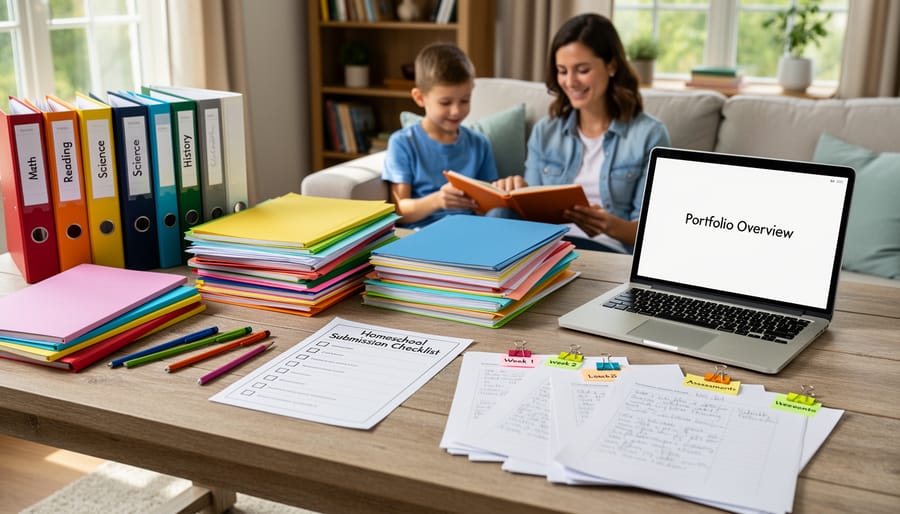
Required Student Information
Your letter of intent must include specific identifying information about each child you’re homeschooling. Start with your child’s full legal name, exactly as it appears on their birth certificate or other official documents. Include their date of birth, which helps the district verify age-related requirements and track enrollment accurately.
You’ll also need to provide your child’s current home address. If your child previously attended public school in the district, include the name of that school and the date they were last enrolled or the date they withdrew. This helps the district close out any existing records and prevents confusion about dual enrollment.
For children who haven’t attended public school in your district before, simply note that they’re new to homeschooling in the area. You don’t need to provide extensive educational history or explain previous schooling arrangements, keep it factual and straightforward.
Many districts ask for grade level, though this isn’t technically required by state regulation. If requested, provide the grade level your child would be entering based on age. This information helps with record keeping but doesn’t lock you into teaching at that specific level, homeschooling allows you to work at your child’s actual ability level regardless of age-based grades.
Parent/Guardian Information
The parent section of your letter of intent is refreshingly straightforward, you just need basic contact information so the district can reach you about homeschooling matters.
Start with your full legal name as it appears on official documents. If two parents or guardians will be sharing homeschool responsibilities, include both names. Next, add your complete mailing address where you want to receive correspondence from the school district. This should be your current physical address where you actually live.
Include at least one reliable phone number, a cell phone works perfectly fine. If you have a preferred email address, add it too. While New York law doesn’t require an email, providing one makes communication easier and faster, especially for time-sensitive matters.
You don’t need to include your educational background, employment information, or teaching credentials in the letter of intent. New York doesn’t require homeschool parents to have teaching certifications or specific degrees. Save those details (if needed at all) for your IHIP, which comes later.
Keep this section simple and accurate. Double-check that your contact information is current, you’ll want to receive any district communications without delay.
The Statement of Intent
The heart of your letter is a simple, direct statement declaring your intention to homeschool. New York doesn’t require fancy legal language or elaborate explanations, you just need to clearly state that you’re choosing to educate your child at home.
Your statement should include three basic elements: your child’s name, their age or grade level, and a clear declaration that you’re providing home instruction. Something like: “I am writing to notify you that I will be providing home instruction to my daughter, Emma Johnson, age 10, who would be entering 5th grade.”
You don’t need to explain why you’re homeschooling, justify your decision, or describe your teaching philosophy. Keep it straightforward and factual. The district simply needs official notification, not your life story or educational manifesto.
If you’re homeschooling multiple children, you can list them all in one letter with a single statement covering everyone, or write separate letters for each child. Either approach works fine; choose whatever feels clearer to you.
Remember, this isn’t an application requiring approval. It’s a notification of your legal right to homeschool.
How to Submit Your Letter of Intent
Once you’ve written your letter, getting it to your school district correctly is the final step. The good news is that submission is straightforward, though it pays to be thorough about documentation.
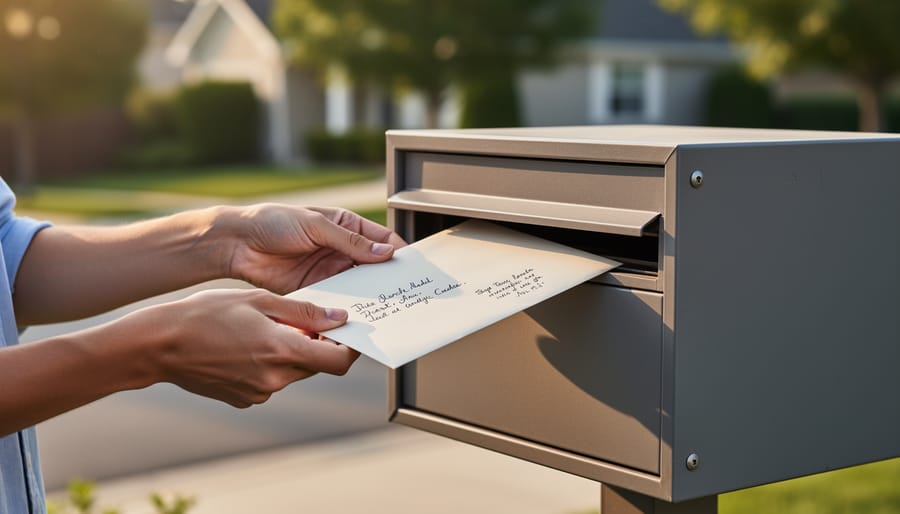
Most New York families submit their letter of intent by mail. Send it via certified mail with return receipt requested. Yes, it costs a few extra dollars, but you’ll have concrete proof that your district received it and when. This matters because districts occasionally misplace paperwork, and you don’t want to be caught without evidence that you filed on time. Regular mail works too, but you’re flying blind without confirmation.
Hand delivery is another reliable option. Walk your letter into the district office, ask them to stamp a copy with the date received, and keep that stamped copy for your records. Some parents prefer this because they get immediate confirmation without waiting for a return receipt to arrive in the mail. If you choose this route, bring two copies, one to submit and one for them to stamp and return to you.
Email submission is trickier because policies vary wildly across New York districts. Some districts accept emailed letters of intent, while others don’t recognize them as valid submissions. Before you hit send, call your district office and explicitly ask whether they accept email submissions and, if so, what email address to use. If they say yes, send it and request a read receipt, then follow up with a phone call a few days later to confirm they received and filed it.
After you submit, most districts will send an acknowledgment letter within a few weeks. This might arrive quickly, or it might take a month. Don’t panic if you don’t hear back immediately. The acknowledgment typically confirms receipt of your letter and outlines the next steps, including the deadline for submitting your Individualized Home Instruction Plan (IHIP). If you haven’t received anything after three to four weeks, a polite phone call to the district office asking about the status of your letter is perfectly appropriate.
Some districts are incredibly organized and responsive; others are overwhelmed and slow. Either way, your responsibility is simply to submit your letter on time with proof of that submission. As long as you’ve done that, you’re in good standing even if they take their time responding.
Sample Letter of Intent Template
Here’s a straightforward template you can customize for your district. Copy this format, fill in your specific information, and you’ll have a complete letter of intent ready to submit.
—
[Your Name]
[Your Address]
[City, State ZIP]
[Phone Number]
[Email Address]
[Date]
[School District Name]
Attention: Superintendent
[District Address]
[City, State ZIP]
Dear Superintendent [Last Name]:
I am writing to notify you of my intention to homeschool my child(ren) for the [2026-2027] school year, in accordance with Section 100.10 of the Regulations of the Commissioner of Education.
Student Information:
Name: [Child’s Full Legal Name]
Date of Birth: [MM/DD/YYYY]
Age: [Age as of December 1st of this school year]
Grade Level: [Grade for upcoming year]
Address: [Child’s Residential Address, if different from yours]
[Repeat for each child you’re homeschooling]
I understand that I will submit an Individualized Home Instruction Plan (IHIP) for approval within four weeks of this notice, outlining the curriculum and educational plan for the year. I also understand my responsibility to maintain appropriate homeschool records and submit quarterly reports as required by New York State regulations.
Thank you for your attention to this matter. Please confirm receipt of this letter at your earliest convenience.
Sincerely,
[Your Signature] [Your Printed Name]—
Keep a copy of your signed letter for your records before submitting. Many parents find it helpful to send this via certified mail or request a stamped copy when hand-delivering, creating clear proof of submission and protecting themselves if questions arise later.
Common Questions and Concerns
Let’s be honest, every homeschooling parent has stared at that blank page wondering if they’re doing this right. The good news? The questions swirling in your head right now are the same ones thousands of New York families have asked before you.
What happens if I miss the deadline?
Late submissions happen, and while you should absolutely aim for the 14-day window, your district will still process a late letter of intent. You might receive a follow-up letter reminding you of the deadline, but missing it doesn’t mean you can’t homeschool. Submit it as soon as you realize you’re late, and move forward with your other requirements.
Do I need a lawyer to review my letter?
No. The letter of intent is a straightforward administrative document, not a legal contract. Thousands of families write these every year without legal assistance. If you’re following the basic requirements and using clear language, you’re fine. Save your money for curriculum instead.
Can my district reject my letter of intent?
Your district cannot deny your right to homeschool based on the letter itself. They might contact you if information is missing or unclear, but they’re required to accept notification of your intent to homeschool. This is notification, not permission.
What if I don’t know our curriculum yet?
You don’t need to specify curriculum in your letter of intent, that information goes in your IHIP, which you’ll submit separately. The letter simply notifies the district that you’re homeschooling.
Should I include my teaching qualifications?
New York doesn’t require specific teaching credentials for homeschooling parents, so you don’t need to include this information. Your letter only needs to state your intent and include the required identifying information.
What if we’re still enrolled in public school?
You need to formally withdraw your child from their current school before or when you submit your letter of intent. Contact the school office to complete withdrawal paperwork first.
Can I email my letter of intent?
This varies by district. Some accept email submissions while others require physical mail or hand delivery. Call your district office to confirm their preferred method and get the correct email address or mailing address.
Do I need to notarize the letter?
Notarization is not required in New York. A simple signed letter is sufficient.
Remember, you’re not alone in this process. Connecting with a local support group can provide reassurance from parents who’ve been exactly where you are now. They’ve navigated these same questions and can offer practical insights specific to your area.
The letter of intent feels like a big deal because it’s your first official step, but it’s truly one of the simpler homeschool requirements you’ll complete. Most districts are accustomed to processing these letters and won’t scrutinize every word. Focus on including the required information clearly, keep a copy for your records, and then shift your energy toward the exciting work of planning your homeschool year.
What Happens After You Submit
Submitting your letter of intent isn’t the end of the compliance process, it’s actually just the beginning. Understanding what comes next helps you avoid last-minute scrambles and keeps your homeschool running smoothly throughout the year.
Within about four weeks of submitting your letter, most districts will send you a response acknowledging receipt. Some districts provide helpful information packets with deadlines and requirements, while others send a simple confirmation. If you haven’t heard anything after a month, it’s worth following up to confirm they received your letter.
Your next major task is preparing your Individualized Home Instruction Plan, or IHIP. This document outlines your curriculum and educational plan for the year. You’ll need to submit it within four weeks of submitting your letter of intent, or by August 15th for the upcoming school year, whichever date comes later. The IHIP includes a list of subjects you’ll teach, textbooks and materials you plan to use, and any resources like co-ops or tutors you’ll incorporate.
Throughout the school year, New York requires quarterly reports documenting your child’s progress. These are due approximately every ten to twelve weeks, with the final one submitted by June 30th. Each report includes hours of instruction, a description of materials used, and either a grade or narrative evaluation of your child’s progress in each subject.
In addition, you’ll need to arrange for an annual assessment of your child’s academic progress. This can be a standardized test or a written evaluation from a qualified professional. The assessment is due by June 30th each year.
Mark these deadlines on your calendar now. Staying ahead of paperwork means more time actually teaching your children.

You’ve just completed one of the most straightforward requirements in New York’s homeschool process. Filing your letter of intent might have felt like a big deal, and yes, it’s an important legal step, but it’s really just paperwork. You’re not asking permission to homeschool. You’re simply notifying your district of a decision you’ve already made for your family.
Take a moment to acknowledge what you’ve accomplished. You’ve navigated state requirements, gathered the necessary information, and taken concrete action toward your child’s education. That’s no small thing.
As you move forward with your IHIP and quarterly reports, remember that each piece of documentation gets easier. You’ll develop a rhythm, find what works for your family, and gain confidence in your ability to meet New York’s requirements while creating the educational experience you envision.
Need more guidance as you continue your homeschool journey? Our site offers comprehensive resources on curriculum planning, record keeping, and navigating every aspect of homeschooling in New York. You’re not alone in this, and you’re more prepared than you think.