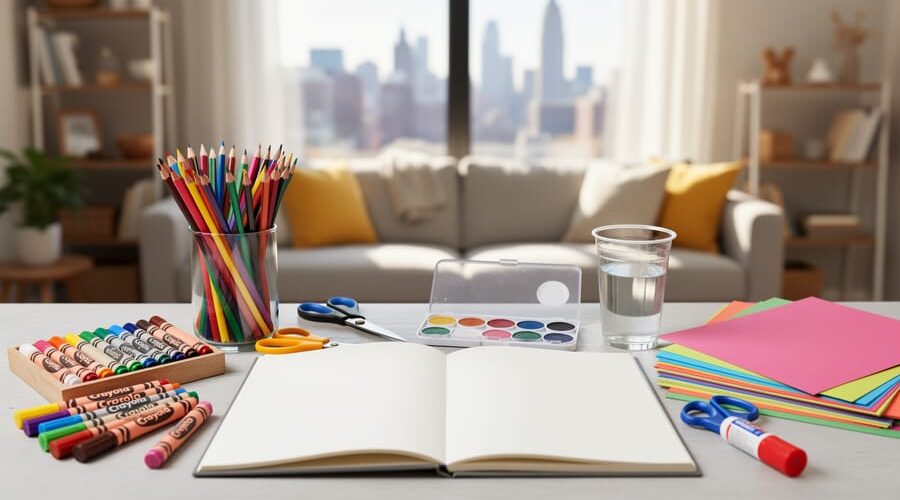
Building a rich art program for your New York homeschool doesn’t require draining your bank account or sacrificing quality. For $200 or less, you can stock a full year’s worth of essential art supplies that meet the state’s requirement for daily arts instruction while giving your children the tools they need to explore drawing, painting, collage, and mixed media.
New York homeschoolers face a unique challenge: balancing the state’s mandate for art education with the practical reality of budget constraints. The good news? Major retailers like Blick Art Materials (serving families since 1911) and Amazon offer reliable, classroom-tested supplies at prices that make daily art instruction financially sustainable. A 36-count set of Crayola colored pencils runs just $6.57, while a 40-pack of washable markers costs $18.99. These aren’t corner-cutting compromises. They’re the same brands art teachers use in traditional classrooms across the state.
The key to affordable homeschool art lies in strategic purchasing: identifying versatile core supplies that work across multiple projects, knowing which premium items actually matter, and understanding where you can confidently choose budget options. This guide walks you through 15 specific products with current 2026 pricing, helping you build a complete art supply collection that satisfies New York’s educational requirements without the sticker shock.
Whether you’re just starting your homeschool journey or refining an established routine, you’ll find practical recommendations that fit real family budgets and real learning goals. Your homeschool art program can be both compliant and creative without breaking the bank.
How We Chose These Art Supplies
We evaluated every item in this list using five clear standards that matter to New York homeschool families working within realistic budgets.
First, each item needed to pass the affordability test. We set a firm ceiling of $20 per item, ensuring that families could build a complete art supply collection without financial strain. This threshold reflects what real homeschool parents can reasonably spend on individual supplies while still covering all their curriculum needs.
Our selection criteria included:
- Affordability under $20 per item to keep costs manageable for homeschool budgets
- Availability to New York families through local stores or reliable online retailers
- Versatility across multiple grade levels and art projects
- Kid-friendly features like washability and safe, non-toxic materials
- Trust from established homeschool communities and positive parent reviews
We prioritized supplies accessible to New York families, whether through local retailers like Blick Art Materials or major online platforms with dependable shipping. Each item needed to work for multiple ages and project types, not just a single narrow use. Safety mattered too, washable markers, non-toxic paints, and age-appropriate materials that parents can hand to kids with confidence.
Finally, we looked at what homeschool families actually recommend to each other. The supplies featured here have earned trust through real classroom use, not just marketing claims. All prices and availability reflect current 2026 data, giving you accurate information for planning your art budget right now.
1. Crayola Ultra Clean Washable Markers (40ct), For Worry-Free Creativity
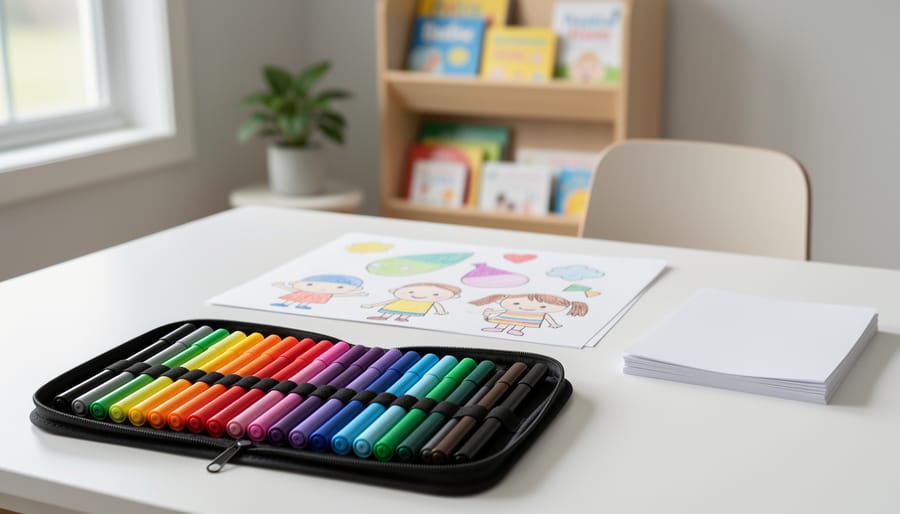
The Crayola Ultra Clean Washable Markers 40-count set sits at $18.99, which might seem steep for markers until you calculate what it costs to replace a stained rug or favorite shirt. For homeschool parents working at the kitchen table, washable matters. These markers clean up from skin, clothing, and most household surfaces with just soap and water, turning potential disasters into minor wipes.
Forty colors give your kids serious variety without buying multiple sets. The range covers basic primaries through earth tones and metallic shades, supporting everything from simple coloring pages for your five-year-old to detailed poster projects for middle schoolers studying the Revolutionary War. You won’t run out of black or blue halfway through the week because high-use colors get multiple markers.
The broad tips handle both fine detail work and filling large areas, so one set covers different project types. Younger children can grip them easily, while older students appreciate the color selection for maps, diagrams, and art assignments. The markers work on standard drawing paper, poster board, and cardboard without bleeding through, though you’ll want to test any delicate papers first.
Each marker has a ventilated cap to prevent choking hazards, a detail that matters when teaching multiple ages simultaneously. The set’s longevity offsets the initial price, these markers last through months of regular homeschool use.
2. Crayola Colored Pencils (36ct), Essential Drawing Foundation
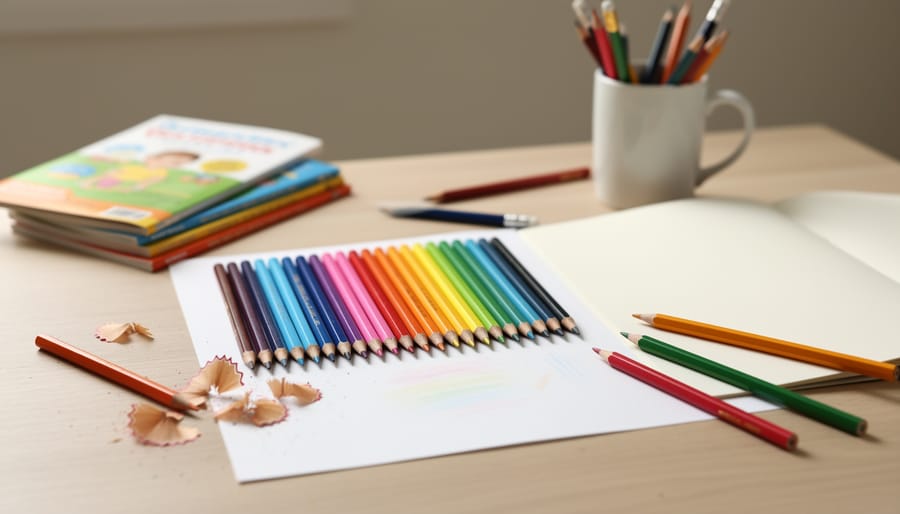
At $6.57 for 36 colors, this set delivers unbeatable value for homeschool families building their art foundation. You’re paying roughly 18 cents per pencil for a trusted brand that performs consistently across different paper types and projects.
These pencils shine in everyday homeschool use. Your kindergartener can color maps for geography lessons while your middle schooler sketches detailed botanical drawings for science journals. The smooth pigment lays down evenly without requiring heavy pressure, which matters when younger students are still developing fine motor control and hand strength.
New York homeschool families often incorporate nature journaling into their curricula, especially when exploring local parks or documenting seasonal changes. Colored pencils are perfect for this work. They don’t bleed through journal pages like markers, they’re portable for outdoor sketching sessions, and students can layer colors to capture subtle variations in fall leaves or urban wildlife.
The 36-color range gives students enough variety to mix and blend without overwhelming beginners. You’ll find the core colors needed for basic drawing alongside enough secondary and tertiary shades for more advanced color theory lessons. The pencils sharpen cleanly and maintain their points reasonably well with regular student use.
For families just starting homeschool art education, this set provides everything needed to teach fundamental drawing skills, color recognition, and observational techniques without a significant financial commitment.
3. Crayola Marker Airbrush Spray Art Kit, Creative Exploration
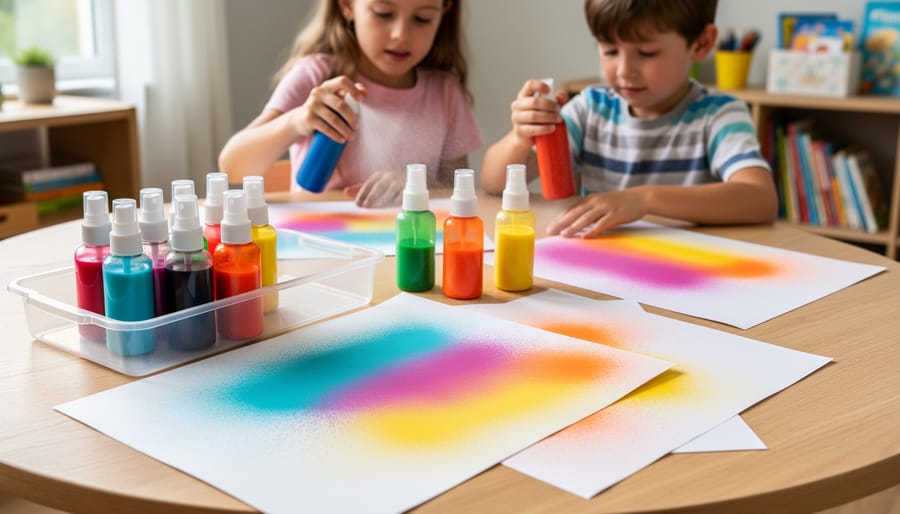
The Crayola Marker Airbrush Spray Art Kit brings a professional art technique into your homeschool classroom for just $14.99. This clever tool transforms ordinary markers into a hands-on airbrush experience, letting kids explore color blending and spray art without investing in expensive compressors or messy spray paint.
Middle-grade homeschoolers especially love this kit because it delivers immediate, satisfying results. Students insert a washable marker into the airbrush tool, then pump air through the chamber to create gradient effects, layered colors, and soft-edge designs impossible to achieve with traditional coloring methods. The technique teaches fundamental color theory concepts while building fine motor control and spatial planning skills.
The kit works particularly well for mixed media projects. Your homeschooler can combine airbrush backgrounds with colored pencil details, add spray effects to collages, or create custom greeting cards and stationery. The washable markers mean cleanup stays simple, addressing a major concern for New York families working in apartments or shared spaces.
This is the kind of supply that bridges art and science in your curriculum. Kids naturally start experimenting with distance, angle, and layering to control the spray pattern. They’re learning cause and effect, testing hypotheses, and developing problem-solving skills while creating artwork they’re genuinely proud to display.
4. Crayola Clicks Retractable Tip Markers (10ct), Portable Art Station
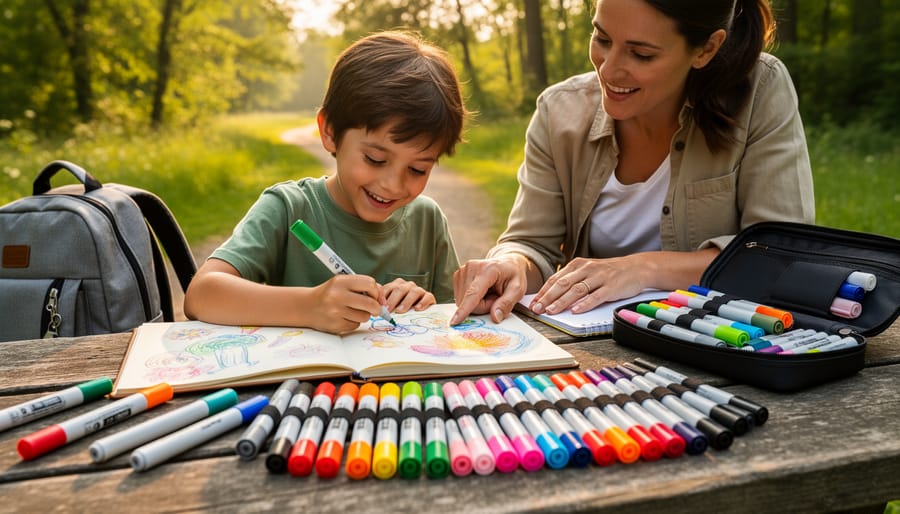
At $9.99, the Crayola Clicks Retractable Tip Markers solve one of the most frustrating parts of homeschool art on the go: lost caps. The retractable design means your kids can sketch at the Metropolitan Museum of Art, color during co-op meet-ups in Central Park, or work on assignments during subway rides without you fishing through bags for missing marker caps.
This 10-count set fits easily into backpacks, purses, and art supply caddies. The click mechanism is simple enough for elementary students to manage independently, and the markers won’t dry out if your child forgets to cap them, because there aren’t any caps to forget. For New York homeschool families juggling multiple locations throughout the week, that’s a real advantage.
The compact size makes these markers perfect for kitchen table art sessions in smaller apartments, where storage space is at a premium. They’re also less intimidating for younger children who struggle with twisting caps back on correctly. The 10-color selection covers basic needs for most drawing and coloring projects, from map-making in geography to illustrating nature journals after trips to the Bronx Zoo.
Parents appreciate how these markers turn waiting time into productive learning moments without the mess or frustration of traditional markers.
5. Crayola Broad Line Markers (12 Count), Classic Classroom Staple
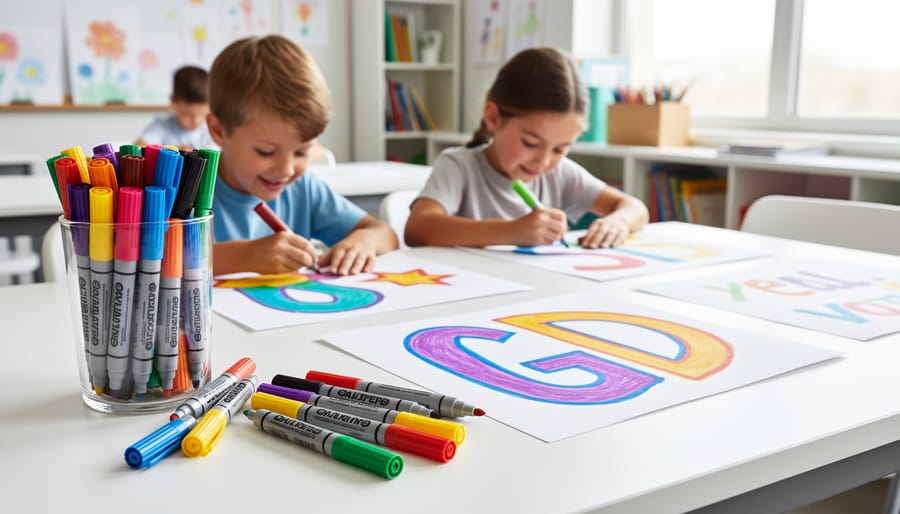
At $7.46 for a 12-count set, Crayola Broad Line Markers represent the most budget-friendly entry point on this list. If you’re just starting homeschool art instruction or need to replace depleted supplies mid-year, this classic set delivers reliable performance without requiring a second thought about the price.
These markers work exactly as New York homeschool families expect from Crayola: consistent color, smooth application, and the durability to handle enthusiastic young artists. The broad tips make them particularly suitable for younger children who are still developing fine motor control. Coloring maps for geography, illustrating science observations, or adding color to handwriting practice all become more engaging with this simple tool.
What makes this set valuable is its role as your workhorse supply. You can stock multiples without guilt, keep a backup set ready when markers inevitably dry out, or let siblings each have their own without budget strain. Many homeschool families buy several sets at once during back-to-school sales, ensuring they’re never without basic markers.
The 12-color assortment covers standard needs, primary colors, secondary colors, and essential shades like brown and black. While you might invest in specialty markers for specific projects, this set handles 80% of daily homeschool art activities. That’s smart budgeting: spending less on everyday supplies means more money available for special materials when inspiration strikes.
6. Sakura Koi Travel Watercolor Set (48 Colors), Professional Quality on a Budget
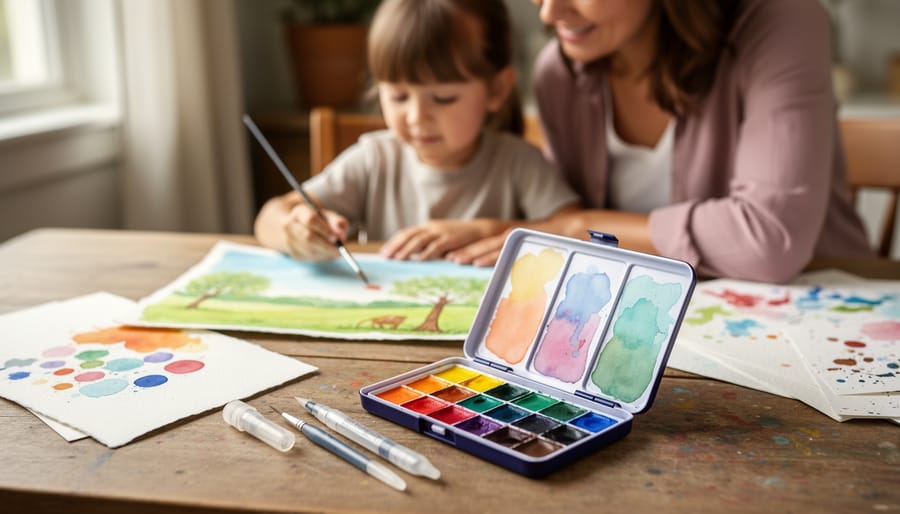
The Sakura Koi Travel Watercolor Set stands out as an investment-grade option that still fits comfortably under the twenty-dollar mark. This compact 48-color set delivers professional-quality pigments in a portable format that works equally well at your kitchen table, on a nature walk through Central Park, or tucked into a backpack for co-op class.
Homeschool art instructors consistently recommend this particular set because it bridges the gap between children’s watercolors and expensive artist-grade paints. The colors show impressive vibrancy and blend smoothly, letting students explore advanced techniques like wet-on-wet blending and color layering without frustration. The built-in mixing palette means you need nothing extra to get started.
The portability factor matters tremendously for New York homeschool families. Whether you’re sketching leaves at the Brooklyn Botanic Garden or painting cloud formations from your apartment window, this set travels easily and sets up in seconds. The snap-close case protects the pans from damage and keeps everything organized, solving the storage challenges many families face in smaller urban spaces.
Students who show serious interest in painting will appreciate having 48 distinct colors to work with rather than mixing everything from primaries. This range lets them match what they observe in nature more accurately and develop their eye for subtle color differences. The quality encourages experimentation because the paints respond predictably, building confidence as artistic skills develop.
7. Quality Watercolor Paper, The Foundation for Paint Projects
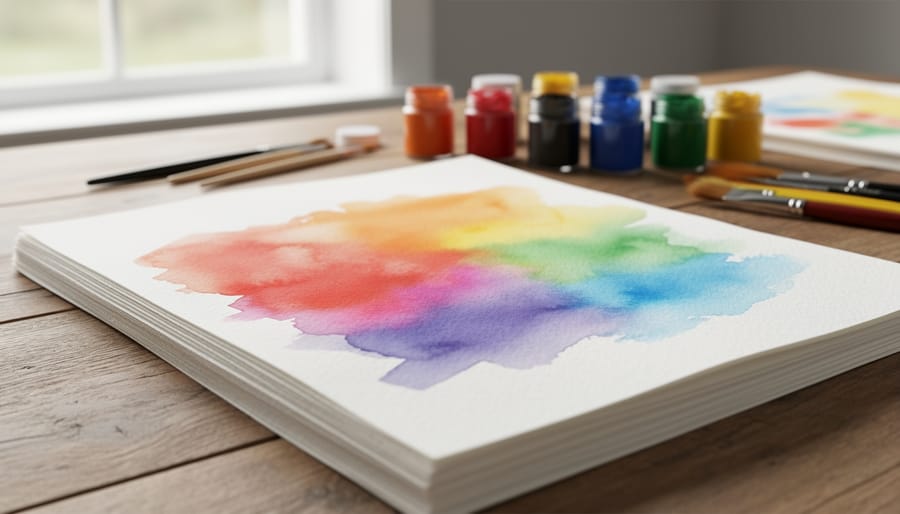
Quality watercolor paper transforms student artwork from frustrating to rewarding. When your homeschooler paints on regular printer paper, it buckles, pills, and tears, destroying their confidence along with their project. Proper watercolor paper absorbs moisture evenly, holds up to multiple washes, and makes colors appear vibrant rather than muddy.
Paper weight matters more than you’d think. Look for 90 lb (190 gsm) as your minimum for homeschool use. Heavier weights like 140 lb handle wet techniques beautifully but cost more. Cold press texture works best for beginners, it has enough tooth for paint to grip but isn’t rough. Hot press feels smoother and suits detailed work once students advance.
New York homeschool families can stretch their budgets by buying pads rather than individual sheets. A 12-sheet pad runs $8-12 at most art retailers, giving you plenty for weekly projects. Student-grade paper from brands like Canson or Strathmore delivers solid performance without the premium price of artist-grade options.
Consider splitting bulk purchases with your homeschool co-op. A 100-sheet block that seems expensive for one family becomes quite affordable when four families share the cost and supplies. Store extra paper flat in a dry location, your investment will stay fresh for years of creativity ahead.
8. Skillmatics Foil Fun Halloween Craft Kit, Seasonal Art Learning
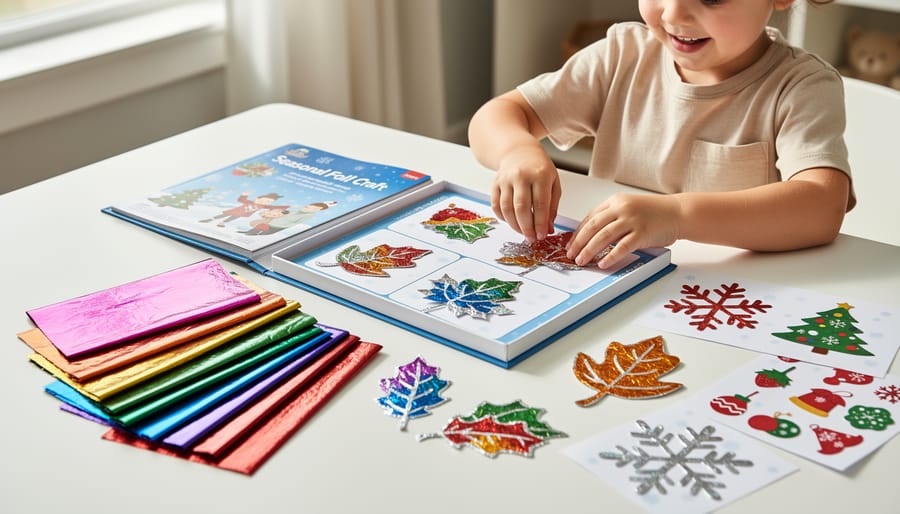
The Skillmatics Foil Fun Halloween Craft kit offers structured project-based learning at $19.97, with over 200 stickers and materials that guide children through completed projects rather than leaving them staring at blank paper. Homeschool families appreciate this approach because it builds confidence, children finish actual artwork they can display, gift, or use, which motivates continued creative exploration.
Seasonal kits like this Halloween-themed set serve double duty in New York homeschool programs. They provide a creative break during fall units while teaching specific techniques like foil application, design planning, and fine motor precision. The included materials eliminate the guesswork about what supplies to buy, and the step-by-step nature helps children work independently while parents handle other lessons.
These kits work particularly well for elementary and middle-grade students who need more structure than open-ended art time provides. The finished projects, decorations, cards, or keepsakes, give tangible evidence of learning that satisfies both the student’s sense of accomplishment and New York’s requirement for a well-rounded curriculum. Consider rotating seasonal kits throughout the year to maintain enthusiasm: Halloween in fall, winter holidays, spring themes, and summer projects keep art fresh without requiring you to plan every lesson from scratch.
9. Student-Grade Acrylic Paint Sets, Versatile and Affordable
Student-grade acrylic paints offer homeschool families the best balance of affordability and versatility, making them a smart foundation for any New York art curriculum. Unlike watercolors that work only on paper or crayons limited to drawing, acrylics adapt to virtually any surface your student wants to explore.
These budget-friendly paints work beautifully on canvas boards, cardboard, wood, rocks, terracotta pots, and even fabric with the right prep. That multi-surface capability means one paint set supports dozens of project types throughout the year, from traditional paintings to garden stone decorations, hand-painted gifts for grandparents, or customized storage boxes for your homeschool space.
When choosing affordable acrylic sets, look for brands offering at least eight basic colors including primary colors, black, and white. Student-grade formulas have less pigment than professional paints, but they’re perfectly adequate for learning color theory, practicing techniques, and completing projects. The key is checking that the paint flows smoothly and mixes well rather than separating or feeling chalky.
Start with smaller tube sets rather than large bottles if you’re testing a brand. Tubes typically stay fresh longer once opened, and homeschool families appreciate not wasting paint. Many New York homeschoolers find that buying a basic set and supplementing with individual colors as projects demand keeps costs manageable while building a complete palette over time.
10. Basic Brush Sets, Quality Tools Without the Price Tag
A basic brush set is one of the smartest investments for your homeschool art program. You don’t need professional-grade brushes that cost $20 each, student-quality sets in the $10-15 range give young artists the tools they need to explore different techniques.
Look for starter sets that include three essential shapes: round brushes for detail work and lines, flat brushes for broad strokes and edges, and filbert brushes (the rounded flat shape) for blending. A good beginner set typically includes 6-10 brushes in various sizes, covering everything from fine details to larger washes.
For homeschool use, synthetic brushes work beautifully with acrylics and watercolors while staying affordable. Natural hair brushes cost more and require extra care that busy homeschool families don’t always have time for.
Proper care extends brush life dramatically. Teach your kids to rinse brushes thoroughly during painting sessions and wash them with mild soap afterward. Never leave brushes standing in water, it loosens the ferrule (the metal part) and ruins the bristles. Store them upright in a jar or flat in your homeschool storage area once they’re completely dry.
Quality student brushes can last years with this basic maintenance, making them a genuine bargain for New York homeschool families.
11. Construction Paper Variety Packs, The Homeschool Workhorse
Construction paper remains the unsung hero of homeschool art programs, offering New York families an incredibly affordable foundation for countless creative projects. Large variety packs, often containing 500 or more sheets in assorted colors, typically cost under $15, delivering a per-sheet price that makes generous experimentation possible. This versatile material supports everything from simple cutting and pasting exercises for kindergarteners to sophisticated layered collages for middle schoolers, making it a true cross-grade workhorse.
Beyond dedicated art time, construction paper bridges into other subjects with remarkable ease. New York homeschool families use it for geometry projects where students create 3D shapes, history timelines with color-coded periods, science diagrams illustrating life cycles, and creative writing exercises where students design book covers for their stories. The material’s forgiving nature encourages bold exploration without the pressure that comes with more expensive supplies.
Smart storage extends your investment significantly. Flat file organizers, labeled magazine holders, or even large zippered bags sorted by color keep sheets crisp and accessible. Many New York homeschoolers combine construction paper with other free and low-cost resources like nature finds, magazine clippings, and fabric scraps to create rich mixed-media opportunities. When you calculate cost per project, construction paper consistently delivers the best value in any homeschool art budget.
12. Blick Art Materials Store Supplies, Local New York Resource
For New York homeschool families who prefer seeing supplies in person before buying, Blick Art Materials offers something online shopping can’t match: expert guidance and hands-on browsing. Established since 1911, Blick has earned trust with art educators and homeschool parents who value knowledgeable staff who actually understand what you’re trying to accomplish in your home classroom.
Walking into a Blick store means access to staff who can answer questions about paper weights, brush types, and which supplies work best for specific age groups. They’ll help you compare options side-by-side instead of guessing from product photos. That expertise matters when you’re building your supplies shopping lists and need to make smart choices with limited budget.
Blick carries everything from beginner craft materials to serious student-grade supplies, all in one location. You can coordinate art purchases with other homeschool needs like your homeschool plannerhomeschool desks or even check their selection if you’re following a lab supplies guide for cross-curricular projects.
The real advantage? You see exactly what you’re getting. No surprises about marker thickness, paper texture, or paint consistency when it arrives at your door.
13. Drawing Pads and Sketchbooks, Daily Practice Made Easy
Regular drawing practice builds artistic confidence and skill, but your student needs the right surface to work on. A quality sketchbook becomes your homeschooler’s creative companion, and you don’t need to spend a fortune to find good options.
Start with paper weight, measured in pounds (lb) or grams per square meter (gsm). Lighter paper around 60-70 lb works fine for pencil sketching and colored pencils, while heavier 80-90 lb paper handles markers and light watercolor without bleeding through. If your student mainly draws with graphite or colored pencils, the lighter weight saves money and keeps the sketchbook portable enough to toss in a backpack for nature journaling or museum visits.
Binding style matters for how your child actually uses the book. Spiral-bound sketchbooks lay completely flat, helpful for younger students who press hard while drawing. Perfect-bound books with glued spines look cleaner and feel more like a real artist’s journal, which motivates some middle and high school students to take their work seriously. Wire-bound options split the difference with durability and a professional look.
Match the sketchbook to your student’s current medium. Smooth paper suits fine-detail work with pens and markers, while slightly textured paper grabs graphite and colored pencil better for shading and blending. Many New York homeschool families keep two types on hand, one for everyday practice and another for finished pieces.
Buy multipacks when you find sales. Sketchbooks store easily, and having several on hand means you won’t run out mid-project or hesitate to let your student experiment freely.
14. Shrink Paper Craft Kits, Science Meets Art
Shrink paper kits deliver something special: that moment when kids pull their artwork from the oven and watch their creation transform into something permanent and professional-looking. The chemistry behind polymer shrinkage turns an ordinary art project into a hands-on science lesson, making these kits perfect for New York homeschool families who want to maximize educational value from every supply purchase.
A 161-piece keychain kit typically includes pre-printed designs, blank sheets for original artwork, colored pencils, and all the hardware needed to turn finished pieces into wearable art. Kids draw their designs at full size, then observe how heating causes the plastic to shrink to about one-third of its original dimensions while the colors intensify and the thickness increases. You’re teaching polymer science, color theory, and fine motor skills simultaneously, and ending up with tangible projects kids actually want to keep.
The cross-curricular applications extend beyond the obvious art-science connection. Younger students can practice tracing and coloring within lines. Middle schoolers might design custom bookmarks for their literature studies or create timeline markers for history projects. Older students can experiment with proportion and scale, designing jewelry or decorative pieces that reinforce math concepts.
Most shrink paper works in a standard home oven at around 325 degrees, making it accessible for any New York homeschool kitchen. The projects store flat before completion, a practical advantage when you’re managing supplies in limited space. Budget-conscious families appreciate that one kit provides multiple finished pieces rather than consumable materials that disappear after a single use.
15. Oil Pastels and Chalk Pastels, Rich Color Without High Cost
Pastels deliver vibrant, blendable color at a fraction of the cost of many other art mediums. Both oil pastels and chalk pastels belong in your homeschool art supply rotation, and you’ll find quality sets well under $20.
Oil pastels create bold, buttery strokes that layer and blend beautifully. They’re perfect for younger artists who struggle with fine motor control because they require minimal pressure. Chalk pastels produce softer, dustier effects that blend with fingertips or blending tools, making them ideal for landscape studies and atmospheric drawings. The main difference? Oil pastels won’t smudge once applied, while chalk pastels need fixative spray to preserve finished work.
For mess management, designate a pastel workspace with a washable surface or old tablecloth. Keep baby wipes handy for quick cleanups, and have students wear old shirts as smocks. Store pastels in their original boxes to prevent breaking and cross-contamination of colors.
Start with a basic 24-count set of each type. As your homeschooler develops preferences, you can expand colors selectively rather than buying expensive complete sets. Many New York homeschool families rotate pastels into their curriculum seasonally, using chalk pastels for fall landscape studies and oil pastels for winter still-life projects, spreading the budget across the year.
Where to Shop: New York Family Strategies
For New York homeschool families, smart shopping means mixing online convenience with local expertise. Amazon offers the widest selection and often the best prices on basics like the $6.57 Crayola colored pencils or the $14.99 airbrush kit, plus free shipping for Prime members. Blick Art Materials, serving artists since 1911, gives you the advantage of seeing supplies in person and asking staff who understand educational needs, helpful when choosing paper weights or paint quality. Check their locations throughout the state for hands-on browsing before big purchases.
Timing matters for your budget. Back-to-school sales in August and September slash prices on construction paper, markers, and basic supplies. Watch for post-holiday clearance in January when craft kits and specialty items drop significantly. Sign up for email lists from both Amazon and Blick to catch flash sales and educator discounts, Blick often runs promotions specifically for homeschool families.
Buy consumables like markers, paint, and paper in bulk when prices dip. A 36-pack of colored pencils costs less per pencil than multiple 12-packs throughout the year. Share specialty items within your co-op, one family buys the watercolor set, another invests in quality brushes, and students rotate through stations. This strategy expands what your kids can try without every family purchasing everything.
Making Art Education Work on Any Budget
The question isn’t whether you can afford art education, it’s how to make the most of what you have. New York homeschool families face unique pressure because state regulations require instruction in art as part of a substantially equivalent education. That requirement doesn’t mean expensive supplies or formal art classes, though. It means consistent exposure and genuine creative work.
Start with quality basics rather than chasing comprehensive collections. A $6.57 set of colored pencils and a stack of plain paper supports more actual learning than a closet full of specialty supplies that overwhelm both you and your kids. The families who build successful art programs on tight budgets share a common approach: they buy versatile materials that work across multiple projects and grade levels, then use them thoroughly before adding anything new.
Multi-use supplies stretch your budget further than specialized items. Construction paper works for collage, painting backgrounds, paper sculpture, and simple drawing. Student-grade acrylics paint on canvas, rocks, wood, and paper. When each supply serves five purposes instead of one, you’re building a functional art program without the price tag.
Community resources matter more than most families realize. New York homeschool co-ops often coordinate bulk purchases that bring per-item costs down significantly. Some groups maintain shared supplies for messier projects like printmaking or clay work. You’re meeting the state’s well-rounded education requirement while teaching your kids that creativity flourishes within constraints, a lesson worth more than any art supply.
Common Questions About Homeschool Art Supplies
Managing an art program at home raises practical questions for New York families. These answers address the most common concerns parents encounter when building their homeschool art curriculum.
How much should I budget monthly for homeschool art supplies?
Most New York homeschool families spend $20-40 monthly on art supplies, though you can start with less by purchasing basics first and adding specialized materials gradually. Buying during back-to-school sales and choosing versatile supplies like the Crayola Colored Pencils at $6.57 stretches your budget further.
What art supplies work for multiple age groups?
Colored pencils, washable markers, construction paper, and watercolors adapt easily across elementary through high school. Younger children use them for free exploration while older students apply the same tools to more complex techniques and formal projects.
How do I store art supplies in a small New York apartment?
Use stackable clear bins, over-door organizers, or rolling carts that tuck into closets between lessons. Label containers by category and keep current projects in a dedicated caddy so setup takes minutes rather than disrupting your whole day.
Can I integrate art into other homeschool subjects?
Absolutely, sketching in nature journals supports science observation, historical timelines become illustrated projects, and geometry concepts come alive through perspective drawing. Cross-curricular art deepens learning while satisfying New York’s requirement for a well-rounded education.
Should I buy individual supplies or complete kits?
Start with basic individual supplies that work across many projects, then add themed kits like the Skillmatics Foil Fun at $19.97 for variety and structured activities. Kits provide novelty and finished projects, while staples like markers and paper offer unlimited creative freedom.
Remember that your questions will evolve as your homeschool art program develops. What stumps you in September might become routine by January, and new interests will spark different supply needs. Connect with other New York homeschool families through co-ops or online groups to share solutions, swap supplies, and discover what works in real apartment and brownstone settings. The homeschool art community offers tremendous practical wisdom about managing supplies, minimizing mess, and keeping creativity flowing without dedicating an entire room to the effort.
Building a rich art program for your New York homeschool doesn’t require a professional studio budget. The fifteen supplies we’ve covered, from Crayola’s $6.57 colored pencils to versatile watercolor sets, prove that quality art education starts with smart choices, not expensive ones.
Start with the basics: markers, colored pencils, and construction paper. Add new materials gradually as your kids develop interests and skills. A middle schooler fascinated by watercolors can explore with the Sakura Koi travel set before you invest in higher-end paints. A younger child experimenting with different mediums benefits more from variety than premium brands.
Remember that creativity flourishes through consistent practice and exploration, not through costly supplies. Your students will learn color theory just as effectively mixing student-grade acrylics as they would with professional pigments. They’ll develop drawing skills whether they’re working in a spiral sketchbook or on loose sheets.
Art education fits naturally into New York’s homeschool requirements for a well-rounded program. These affordable supplies make it easy to incorporate regular creative work alongside math, science, and language arts, building the visual literacy and problem-solving skills that benefit every area of learning. Your homeschool art curriculum can be both excellent and economical.
Heads up: some links here are affiliate links, and purchases through them support the site.