Choosing an online homeschool science curriculum for your New York family means finding a program that delivers solid content, meets state documentation requirements, and includes the lab materials you need to teach hands-on science at home. Most comprehensive programs provide digital lessons paired with either included lab kits or detailed supply lists, and the right choice depends on your child’s grade level, your budget, and how much hands-on experimentation you want to incorporate.
New York homeschoolers must keep detailed records of science instruction as part of your quarterly reports and annual assessments, so your curriculum should make documentation straightforward. You’ll want a program that clearly outlines what your student has completed, provides assessment tools, and covers appropriate content depth for your child’s age. The lab component deserves special attention because quality science education requires experimentation, not just reading about concepts.
The good news? You don’t need a full chemistry lab in your basement. Many families successfully teach rigorous science using kitchen supplies, nature walks, and affordable lab kits designed for home use. Some curricula ship everything you need in organized boxes, while others give you flexibility to gather materials yourself or skip experiments that don’t fit your space or comfort level.
This guide walks you through the key factors for evaluating online science programs, compares the main curriculum types available to New York families, and helps you avoid common mistakes like underestimating prep time or choosing a program mismatched to your teaching style. Whether you’re teaching elementary nature studies or high school chemistry, you’ll find practical guidance for setting up a science program that satisfies both your student’s learning needs and New York’s homeschool regulations.
What to Look for When Choosing Online Science Curriculum
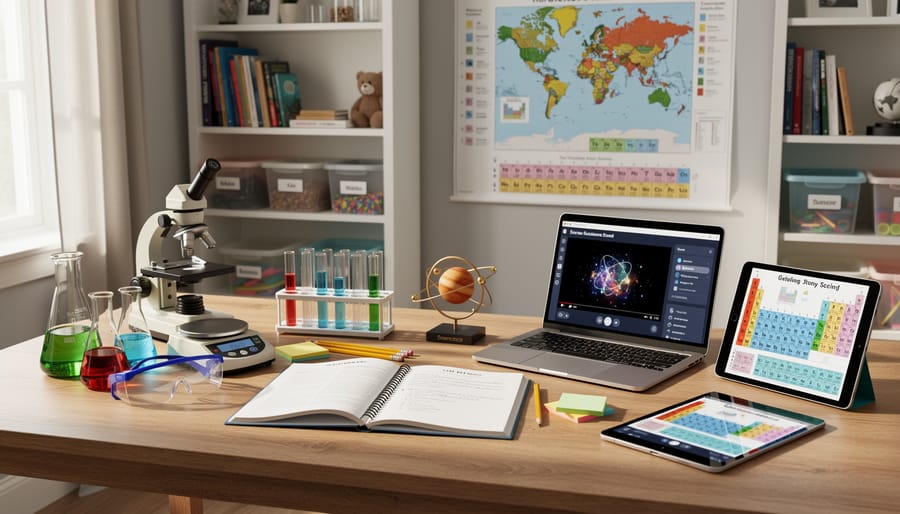
Selecting an online science curriculum requires balancing educational rigor with practical realities. New York homeschooling families face unique considerations, from state documentation expectations to limited workspace for experiments. A program that works brilliantly for one family might overwhelm another, so understanding your evaluation criteria upfront saves frustration later.
Start by examining how well each curriculum aligns with NY homeschool record keeping requirements. You’ll need to document your science instruction throughout the year, including topics covered, time spent, and student progress. Some online programs generate detailed reports automatically, with lesson completion tracking and grade summaries that translate directly into your required quarterly reports. Others leave documentation entirely to you. Consider whether you want built-in record-keeping tools or prefer maintaining your own files, and verify that the curriculum provides sufficient documentation of content coverage.
Grade-level appropriateness matters more than you might expect. A program marketed for sixth grade might actually target advanced fifth graders or struggling seventh graders. Look beyond the grade label to examine the actual content difficulty, reading level, and prerequisite knowledge assumed. Does the curriculum offer placement tests or detailed scope-and-sequence documents? Can you preview sample lessons before committing? Your child’s current science background and learning pace should drive this decision, not just their age.
The lab component deserves careful scrutiny. Here’s what to evaluate:
- Whether experiments are virtual simulations, require shipped kits, or assume you’ll source materials independently
- How complex the lab setups are and whether they fit your available space, from kitchen counters to dedicated homeschool desks
- What safety equipment and adult supervision each experiment demands
- Whether consumable supplies need regular replenishment and how easily you can obtain them
- If the curriculum provides detailed supply lists, shopping links, or vendor partnerships
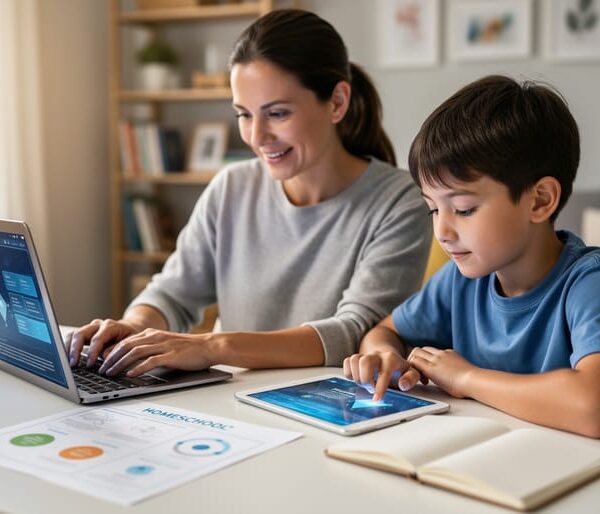
Instructor support varies dramatically across programs. Live classes with direct teacher interaction suit students who thrive on external accountability and immediate feedback. Pre-recorded video lessons with email support work well for self-motivated learners who need flexibility. Completely independent text-based curricula demand strong reading comprehension and parent facilitation. Match the support level to your child’s learning style and your availability to guide their work.
Digital platform accessibility affects daily usability. Test whether the program works smoothly on your devices, loads quickly with your internet connection, and offers offline options for areas with spotty service. Check if multiple children can use one account, whether you can access materials on tablets and phones, and how long you retain access to completed courses.
Budget considerations extend beyond the initial curriculum cost. Factor in lab supply expenses, consumable refills throughout the year, and whether you’ll need to purchase additional resources like lab notebooks or safety equipment. Some programs bundle everything upfront, while others reveal ongoing costs as you progress through the year.
Types of Online Science Curricula for Homeschoolers
Fully Online Programs with Virtual Labs
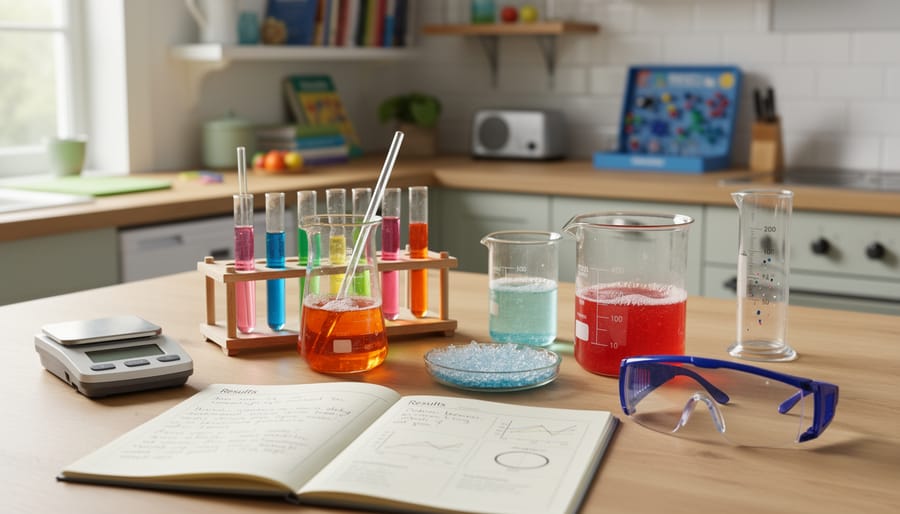
Fully online programs deliver science instruction entirely through your computer or tablet, replacing physical experiments with interactive simulations, virtual dissections, and digital lab environments. Students manipulate variables on screen, observe animated reactions, and record data just as they would in a traditional lab, without purchasing beakers, chemicals, or microscope slides.
These programs shine for families short on storage space or dealing with safety concerns about hazardous materials at home. They’re also budget-friendly, since you won’t face ongoing costs for consumables or replacement equipment. The digital format integrates seamlessly into your homeschool planner and students can repeat experiments instantly to test different hypotheses or correct mistakes, something impossible with one-use materials.
The trade-off is tactile learning. Virtual labs can’t replicate the smell of a chemical reaction, the resistance you feel when dissecting preserved specimens, or the problem-solving required when real equipment doesn’t behave as expected. Students miss the fine motor skills development and the authentic laboratory techniques that colleges expect from lab science courses. Some New York families use virtual programs for introductory concepts, then supplement with occasional hands-on experiments using household items to bridge that sensory gap.
Online Instruction with Physical Lab Kits
Programs that combine online instruction with physical lab materials offer a middle ground between fully virtual learning and traditional hands-on science. These curricula typically deliver lessons through video lectures or interactive modules while shipping experiment kits directly to your home or providing detailed supply lists for you to assemble. You’ll receive structured guidance on when and how to complete each lab activity, with the curriculum coordinating the timing between digital instruction and physical experiments.
The main advantage is convenience, someone else has curated the materials you need, often pre-measured or pre-packaged for specific experiments. This saves hours of research and shopping while ensuring you have the right supplies at the right time. However, you’ll need dedicated storage space for arriving kits, and consumable materials will need replenishment as your student progresses through the course. Some programs ship everything upfront, while others send materials in stages throughout the year.
Managing these supplies requires planning ahead. Review the curriculum’s shipping schedule and storage requirements before committing, especially if you’re working with multiple children or limited workspace. Check whether kits include refills for repeated experiments or if you’ll need to source additional materials locally. Most programs design labs with household safety in mind, but you’ll still need basic protective equipment and a designated workspace where spills and experiments won’t disrupt daily life.
Hybrid and Self-Paced Options
Hybrid and self-paced programs give New York families maximum control over when and how science lessons happen. These curricula typically combine pre-recorded video lessons or interactive modules with downloadable experiment guides that parents facilitate at home. You work through content on your own timeline, advancing quickly through familiar topics or spending extra weeks on challenging concepts, without waiting for scheduled class sessions.
The flexibility suits families with irregular schedules, multiple children at different levels, or students who need accommodation for learning differences. You can pause mid-unit for family travel, adjust the daily workload around other commitments, or repeat difficult sections without falling behind a class.
Most hybrid programs provide a structured curriculum sequence with checkpoints and suggested pacing, but enforcement varies. Some require periodic assignment submissions; others operate on pure honor system with optional assessments. Lab components usually come as separate supply lists you source yourself, giving you control over experiment timing and material quality.
The tradeoff: these programs demand significant parental involvement. You’re responsible for keeping students on track, troubleshooting experiments, and ensuring coverage stays adequate for your homeschool records. Families who thrive with self-paced science tend to build regular lab days into their weekly routine rather than fitting experiments around other subjects haphazardly.
Building Your Home Science Lab: Essential Supplies
Basic Equipment Every Home Lab Needs
Starting a home science lab doesn’t require a professional setup. A few versatile tools serve you across biology, chemistry, physics, and earth science throughout your homeschooling years.
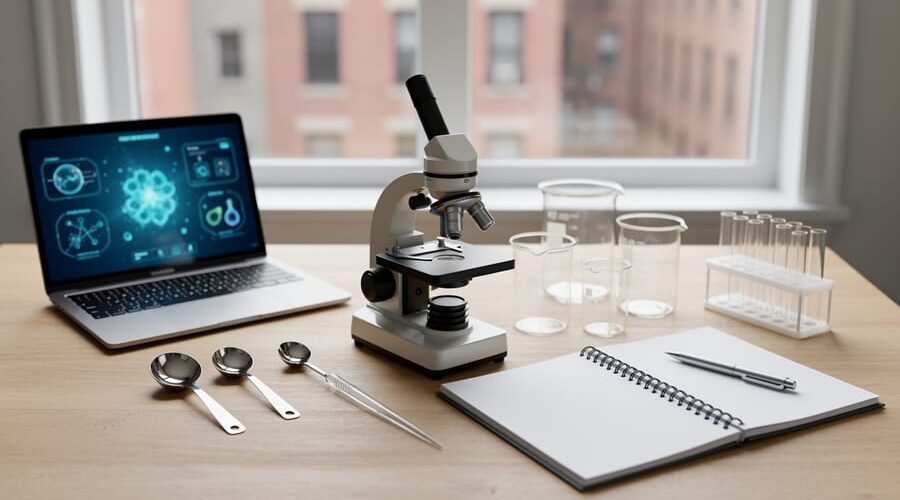
Invest in accurate measuring instruments first: a digital scale for mass measurements, measuring cups and graduated cylinders for liquids, and a reliable thermometer. These appear in experiments across every science discipline. Add a basic microscope for elementary and middle school biology work, and a magnifying glass for younger students or field observations.
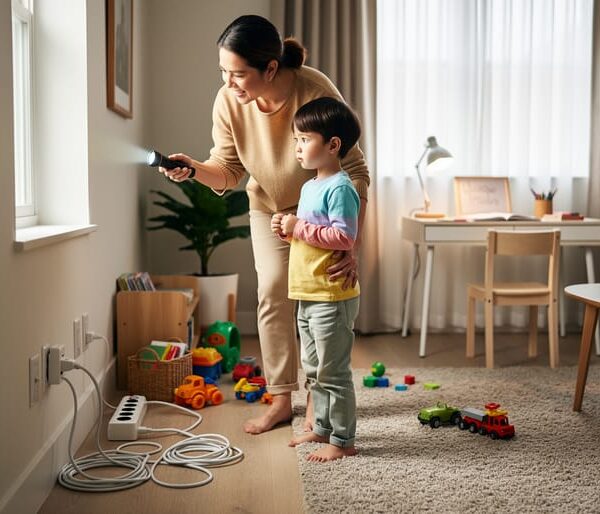
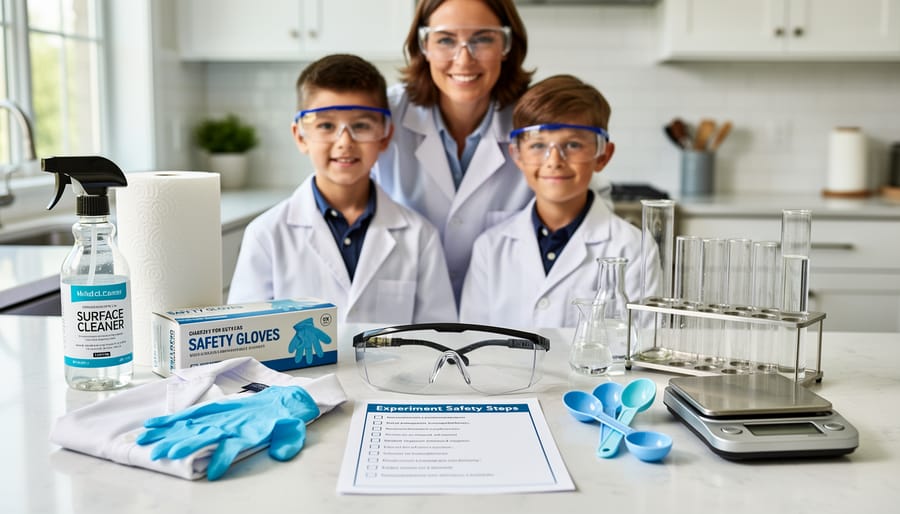
Safety equipment is non-negotiable. Stock safety goggles for each family member participating in experiments, disposable gloves, and a first aid kit. Keep baking soda and vinegar on hand to neutralize minor chemical spills.
For general lab work, gather an assortment of clear containers in various sizes, mixing bowls, plastic droppers, stirring rods or craft sticks, rubber bands, string, and tape. Glass jars with lids work well for storage and observation. Include notebooks dedicated to lab work where students can sketch observations and record data.
Storage matters as much as supplies. Designate a cabinet or shelf for equipment and materials, keeping hazardous substances locked if you have younger children in the home. Label everything clearly and maintain an inventory list to track consumables that need replacement.
Subject-Specific Supply Lists
Each science discipline requires its own set of specialized materials to conduct meaningful experiments at home. Here’s what you’ll need to build subject-specific capabilities in your homeschool lab.
Biology calls for specimens, slides, and observation tools. Essential items include prepared and blank microscope slides, petri dishes, pipettes, dissection tools, and a compound microscope for high school work. You’ll need living materials like plant seeds, yeast cultures, and preserved specimens for dissection. Staining supplies help visualize cells, while culture media supports growing bacteria or fungi safely. Consider starting with a basic microbiology kit and expanding based on your curriculum’s focus.
Chemistry demands glassware, measuring tools, and reagents. Stock test tubes, beakers, graduated cylinders, and stirring rods in various sizes. A digital scale accurate to 0.1 grams proves invaluable for quantitative experiments. Common chemicals include acids (vinegar, citric acid), bases (baking soda, ammonia), indicators (pH paper, phenolphthalein), and salts for precipitation reactions. Safety equipment, goggles, gloves, and aprons, isn’t optional. Proper lab storage keeps chemicals separated and secure, especially in homes with younger children.
Physics requires less consumable material but specific measurement tools. Digital multimeters, spring scales, stopwatches, thermometers, and basic electronics components (batteries, wires, resistors, LEDs) form the core. Add magnets, pulleys, inclined planes, and materials for building simple machines. Many physics experiments use household items creatively, making this the most budget-friendly discipline to equip.
Earth science thrives on rock and mineral specimens, weather instruments, topographic maps, and soil testing kits. A hand lens or magnifying glass suffices for most geological observations. Consider adding a compass, barometer, and rain gauge for meteorology units.
Where to Source Lab Supplies in New York
New York homeschooling families have several reliable avenues for sourcing science lab supplies, each offering different advantages depending on your curriculum needs and timeline.
National Online Educational Suppliers ship to New York and typically stock comprehensive catalogs covering biology, chemistry, physics, and earth science equipment. These vendors often organize products by grade level and subject, making it straightforward to match purchases to your curriculum requirements. Many also offer prepared lab kits that align with popular homeschool programs.
General Online Retailers provide competitive pricing on basic lab equipment like safety goggles, measuring tools, glassware alternatives, and storage containers. While these sources may not carry specialized scientific instruments, they excel for foundational supplies and consumables.
Local Resources within New York include educational supply stores in larger cities, science museum gift shops that stock age-appropriate experiment materials, and hardware stores for items like measuring tools and safety equipment. Building supply centers often carry materials useful for physics and engineering projects.
Creating detailed supplies shopping lists before purchasing helps families compare options across vendors and avoid duplicate orders. Start with your curriculum’s required materials list, then identify which items you’ll use across multiple units or years to prioritize quality investments versus consumable supplies you’ll need to replenish regularly.
Curriculum Recommendations for Different Learning Stages
Elementary Science: Building Curiosity
Elementary science curricula for grades K-5 should emphasize hands-on exploration and observation rather than formal lab procedures. At this stage, the best online programs pair short video lessons or interactive animations with simple experiments using household items, think growing seeds, observing weather patterns, or exploring magnets and buoyancy. Look for curricula that keep instruction segments brief (10-15 minutes) and encourage children to ask questions and make predictions before conducting activities.
For New York homeschoolers, elementary science doesn’t require elaborate lab equipment. Most experiments at this level use items you already have: measuring cups, flashlights, ice cubes, plants, and basic art supplies. The goal is building scientific curiosity and vocabulary, not producing lab reports. Some programs provide structured experiment guides, while others offer open-ended exploration prompts, choose based on your child’s personality and your comfort level facilitating activities.
Safety at this stage is straightforward: supervise activities involving heat or sharp objects, and teach children to wash hands after handling materials. Keep your records simple, a science journal where your child draws observations or dictates findings works well for NY documentation purposes and creates a meaningful portfolio of their learning journey.
Middle School: Introducing Formal Scientific Method
Middle school science marks a shift toward more rigorous, structured learning. Online curricula for grades 6-8 typically introduce formal hypothesis testing, controlled experiments, and detailed lab reports, skills that prepare students for high school-level work. Look for programs that guide students through the scientific method systematically rather than treating it as an abstract concept.
At this stage, lab components should involve multi-step procedures, precise measurements, and data analysis. Experiments might include observing chemical reactions, dissecting specimens, building simple circuits, or testing variables in physical systems. Many programs expect students to work more independently, following written protocols with periodic parent supervision rather than constant guidance.
Documentation becomes more important for New York homeschool records. Your middle schooler should keep a lab notebook recording observations, measurements, and conclusions for each experiment. This practice builds scientific literacy and creates the portfolio evidence you’ll want for your annual assessment. Some online programs provide structured templates for lab reports; others expect families to develop their own formats.
Budget for more specialized supplies as topics grow more complex. Chemistry experiments may require specific reagents, biology units often involve dissection materials, and physics projects might need measurement instruments beyond basic rulers and timers. Plan ahead by reviewing the curriculum’s supply list before each unit starts, allowing time to order materials without rushing experiments.
High School: Meeting College Prep Standards
High school science curricula need to deliver college-ready rigor while maintaining the documentation New York homeschoolers submit in their annual assessments. Look for programs offering full-year courses in biology, chemistry, physics, and potentially earth science or environmental science, covering content equivalent to what traditional schools teach. The curriculum should include genuine laboratory work, not just simulations, because colleges expect transcripts to show “lab science” credits for admission.
Lab documentation becomes critical at this level. Choose programs that provide detailed lab manuals and help you record each experiment with observations, data tables, and conclusions. Save all lab reports, photos of setups, and any assessments the curriculum includes. These materials demonstrate to New York authorities that your student completed substantive science instruction and provide backup if college admissions officers question lab components.
Consider whether your student plans to take AP exams or SAT Subject Tests, which some curricula explicitly prepare for. Programs designed for college prep typically include more quantitative problem-solving, graphing and data analysis, and written lab reports that mirror college expectations. Balance rigorous content with your family’s capacity to supervise more complex experiments and handle advanced equipment safely at home.
Common Mistakes to Avoid When Choosing Science Curriculum
Choosing the wrong science curriculum can derail your homeschool year and leave you scrambling mid-semester. Most mistakes stem from underestimating practical realities or prioritizing features that don’t match your family’s actual needs.
Underestimating Lab Supply Costs and Setup Time
Many families focus exclusively on curriculum price and discover too late that lab materials add hundreds of dollars and require dedicated storage space. Before committing to a program, request a full supply list and price out the items. Some curricula assume you already own microscopes or chemistry glassware, while others include everything. Factor in shipping costs for specialty items and the time you’ll spend organizing materials before each experiment. Start with low-cost resources for basic supplies before investing in specialized equipment.
Choosing Based on Reputation Rather Than Learning Style
A curriculum lauded by other families may frustrate your student if it doesn’t match how they learn. Video-heavy programs overwhelm some kids, while text-based courses bore others. Request sample lessons or trial periods to gauge fit before purchasing a full year. Consider your student’s reading level, attention span, and preference for independent versus guided work.
- Ignoring NY documentation requirements and scrambling to reconstruct lab records later
- Overlooking the parental time commitment required for lab supervision and setup
- Failing to budget for consumable resupply throughout the year, especially chemicals and dissection specimens
- Selecting overly ambitious programs that exceed your available space or safety comfort level
- Not accounting for multiple children sharing equipment and curriculum simultaneously
Preventing These Pitfalls
Before purchasing, create a realistic assessment of your available time, space, and budget for the entire year. Track what consumables need regular replacement and build that into your planning. Keep a science portfolio from day one rather than trying to reconstruct it months later for your annual assessment. Start with simpler lab setups and scale up as your confidence grows.
Keeping Records and Meeting New York Requirements
New York homeschool regulations require families to maintain quarterly reports and an annual assessment, and your science instruction forms part of that documentation. The good news is that online curricula often generate records automatically, completion certificates, progress reports, grade reports, and assignment logs, which simplify your recordkeeping significantly. Download and save these reports each quarter as evidence of your student’s work.
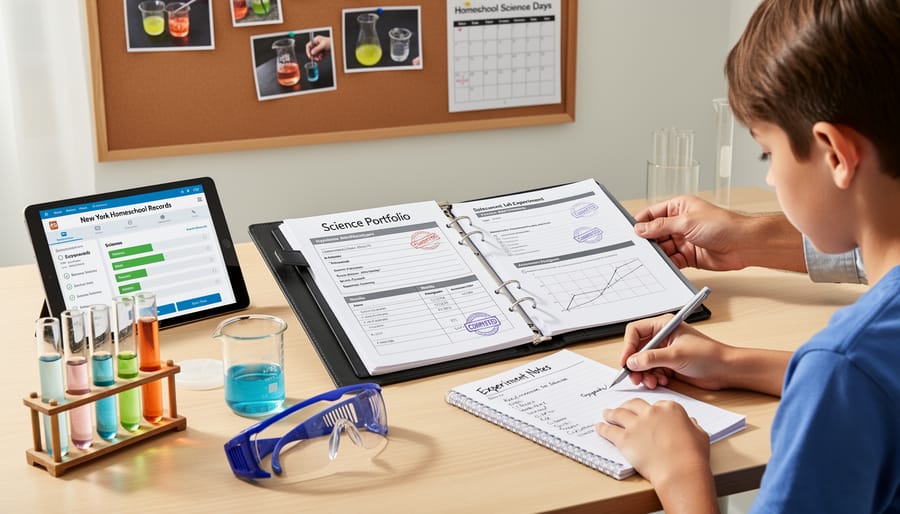
For lab components, create a simple science portfolio that documents hands-on learning. Include photographs of your student conducting experiments, completed lab worksheets or notebooks, and brief descriptions of the activities performed. You don’t need elaborate write-ups; a dated photo and a sentence explaining the experiment demonstrates engagement with practical science. This visual record complements the online platform’s documentation and shows your student actively participated in laboratory work.
Keep a course description or syllabus for each science class, noting the topics covered and the materials or kits used. When you file your quarterly report with your school district, you’ll list science among the subjects taught. At year-end, your annual assessment (whether through standardized testing, portfolio review, or narrative evaluation) should reflect the science work completed. Most families find that the combination of platform-generated reports, a modest lab portfolio, and a brief course outline provides more than adequate documentation.
Store these records for at least three years. If your curriculum provides access to past coursework online, take screenshots or download PDFs periodically, platform access can expire after subscription ends. Organized records protect your homeschool program and give your student a clear academic transcript when needed for high school credit or college applications.
Frequently Asked Questions
Can I use the same online science curriculum for multiple children at different grade levels?
Many online curricula work well for multi-age families, especially if you choose programs with flexible pacing and separate login accounts for each student. You can often share physical lab supplies across grade levels while each child works through age-appropriate lessons, though you’ll need to manage different experiment schedules and ensure adequate supplies for overlapping lab work.
How do I safely manage potentially hazardous materials like acids or dissection specimens at home?
Start with proper storage in a locked cabinet away from young children, use appropriate safety equipment including gloves and goggles, and supervise all experiments involving chemicals or preserved specimens. Many suppliers now offer household-safe alternatives to traditional lab chemicals, and you can skip particularly hazardous experiments in favor of virtual labs or demonstrations without compromising educational quality.
What happens if we need to switch science curricula mid-year?
Switching curricula is manageable if you maintain clear records of topics covered and experiments completed, which you’ll need for your New York homeschool documentation anyway. Most online programs allow you to start at any point in the year, though you may need to purchase new lab supplies if the replacement curriculum uses different materials or formats.
Are there budget-friendly ways to do quality science education without expensive online programs?
You can combine free or low-cost video resources with library books and household items for experiments, purchasing only specialized equipment as needed. Many families successfully mix free online lessons with a modest investment in basic lab supplies, focusing on consumables you can replenish affordably and reusing core equipment across multiple years and subjects.
How flexible are online science programs if we travel or have irregular schedules?
Self-paced online curricula offer the most flexibility for families with varying schedules, allowing you to complete lessons and labs whenever it suits your routine. Scheduled programs with live instruction require more commitment to specific times, though many offer recorded sessions you can watch later if you miss a class.
Do I need a science background to teach using online curriculum and lab kits?
Most online science programs designed for homeschoolers include thorough parent guides or instructor videos that explain concepts and lab procedures, so you can learn alongside your student. For high school courses requiring deeper expertise, look for programs with instructor support or office hours where students can ask questions directly, reducing the teaching burden on you.
These questions reflect the real concerns New York homeschooling families face when balancing educational quality with practical constraints. The beauty of online science curriculum is that it gives you options: you can invest in comprehensive programs with full support, or you can piece together resources that match your budget and teaching comfort level. Either approach can meet New York’s homeschool requirements as long as you document the work and ensure your student engages with genuine scientific inquiry.
Remember that flexibility extends beyond scheduling. If a particular curriculum’s lab approach doesn’t work for your space, budget, or family dynamics, you can adapt it. Substitute safer materials, scale experiments down, or supplement weak areas with resources from other programs. The goal is meaningful science learning that fits your household, not perfect adherence to any single curriculum’s prescribed path.
Choosing the right online science curriculum for your New York homeschool comes down to understanding your student first, then finding the program and supplies that support their learning journey. There’s no single perfect curriculum, only the one that fits your family’s schedule, your child’s learning style, and your educational goals while meeting New York’s documentation requirements.
Start by identifying how your student learns best and what level of parental involvement works for your household. Then evaluate curricula based on the factors we’ve covered: lab component quality, grade-level fit, instructor support, and record-keeping compatibility. Remember that your science program will evolve as your student grows, and it’s okay to adjust course when something isn’t working.
The lab supplies and hands-on experiments are what transform science from abstract concepts into genuine understanding. Whether you’re setting up a simple elementary observation station or a high school chemistry workspace, those physical experiences create lasting learning. New York homeschooling families have successfully taught rigorous science for decades with creativity and resourcefulness.
Trust your judgment, use your student’s natural curiosity as your guide, and know that you’re capable of facilitating excellent science education at home. The investment you make in thoughtful curriculum selection and practical lab setup pays dividends in your child’s scientific literacy and critical thinking skills.