Sourcing homeschool supplies in Queens means tapping into one of the most resource-rich urban environments in the country. Within a 10-mile radius, Queens families have access to major retail chains, specialty ethnic bookstores offering multilingual materials, an exceptional public library system with educator cards, and quick transit to Manhattan’s curriculum hubs. The key is developing a neighborhood-specific shopping strategy that leverages local retailers for everyday items, cultural shops for enrichment, and online vendors for specialized curriculum, all while staying within New York’s homeschool reporting requirements.
Queens’ geography presents both opportunity and challenge. The borough sprawls across 109 square miles with distinct commercial centers in Flushing, Astoria, Forest Hills, and Jamaica. Each neighborhood offers different supply strengths. Flushing’s Asian bookstores stock advanced math workbooks and STEM materials often unavailable elsewhere. Astoria’s European import shops carry Montessori manipulatives and art supplies. Forest Hills gives you Barnes & Noble and Container Store for organization systems. Jamaica provides discount retailers where bulk basics come cheap.
Urban homeschoolers face space constraints that suburban families don’t. Your supply strategy needs to account for apartment storage, which means prioritizing consumables you’ll use within three months, choosing digital resources when practical, and identifying same-day pickup options for last-minute needs. The good news: Queens ZIP codes qualify for free same-day delivery from most major retailers, turning storage challenges into flexibility.
New York’s homeschool regulations require maintaining attendance records and quarterly reports, which influences your supply planning. You’ll need organizational tools that document not just what you bought, but how materials connect to your Individualized Home Instruction Plan filed with your local school district.
What You’ll Need Before You Start Shopping
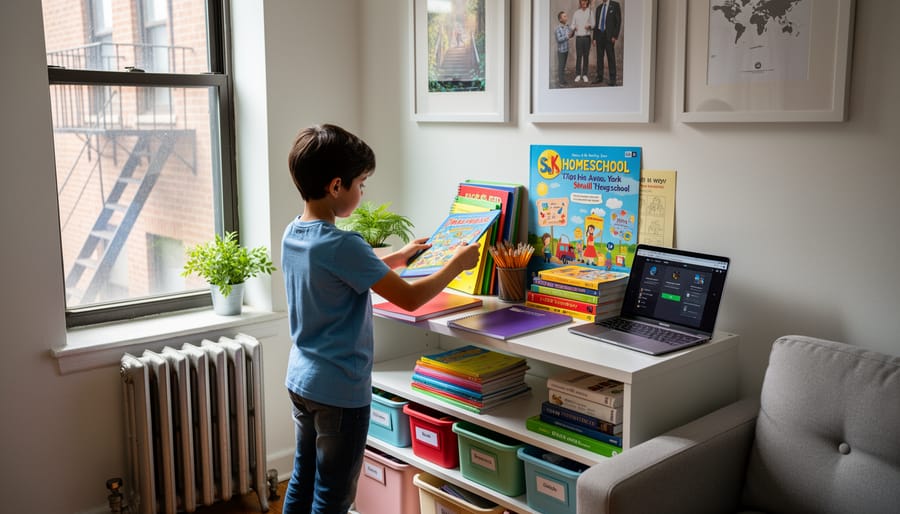
Before you step foot in a store or open a browser tab, you need a clear picture of what you actually need versus what you already own. Too many Queens families overspend in September because they shop reactively rather than strategically. Start by gathering your curriculum plans and New York’s homeschool paperwork in one place.
Your IHIP (Individualized Home Instruction Plan) isn’t just a compliance document, it’s your shopping blueprint. The subjects you listed for your child’s grade level directly determine which materials you must purchase. If you committed to teaching earth science this year, you’ll need lab supplies and field guides. If you’re covering New York State history, maps and primary source materials become essential. Review your IHIP alongside any curriculum you’ve already purchased to identify gaps before you buy duplicates or miss required components.
New York’s record-keeping requirements also shape your supply needs. You’ll submit quarterly IHIP progress reports documenting your child’s work, which means you need portfolios, binders, or digital storage solutions from day one. Plan for assessment materials, attendance logs, and work samples that prove you’re covering the mandated subjects. These aren’t optional extras, they’re compliance essentials that belong on your shopping list.
Before you shop, walk through this preparation checklist:
- Current curriculum plan with specific textbooks, workbooks, and program names
- NY IHIP subjects for your child’s grade level and any special requirements
- Student learning style preferences (hands-on manipulatives versus worksheets, visual versus auditory materials)
- Available storage space in your Queens home or apartment
- Annual homeschool budget allocation broken down by subject and quarter
Next, inventory what you already have. Open closets, dig through bins from last year, and check digital subscriptions you’re still paying for. Many Queens families discover they already own half of what they need, it’s just disorganized or forgotten. Create three piles: keeping and using, repurposing for a different grade, and donating to other homeschoolers. This audit prevents buying a third set of pattern blocks when the first two are buried in storage.
Smart Shopping Considerations for Queens Homeschoolers
Before you spend a dollar on homeschool supplies, take time to evaluate a few strategic considerations that will save Queens families both money and frustration. These factors make the difference between efficient sourcing and costly mistakes.
Start by thoroughly inventorying what you already own, many Queens families accumulate materials from previous school years, library checkouts, and well-meaning relatives that can fulfill current curriculum needs without new purchases. Cross-reference your list against your IHIP to avoid buying duplicates or materials you won’t actually use this quarter.
Timing matters significantly in Queens. NYC offers sales tax holidays typically in August, which can save you 8.875% on qualifying school supplies. Mark these dates and plan major purchases accordingly. Additionally, post-holiday clearances in January and June offer deep discounts on craft supplies, storage solutions, and general education materials at Queens retailers.
Understanding return policies protects your investment. Target and Barnes & Noble in Rego Park offer generous return windows, but specialized curriculum publishers often don’t accept returns on opened materials. Save receipts and keep items in sellable condition until you confirm they work for your student.
Check Queens Public Library branches first, the system provides free low-cost resources including educator cards, STEM kits, museum passes, and reference materials that eliminate many purchase needs entirely. This single step can reduce your annual supply budget by 30-40%.
Finally, connect with other Queens homeschoolers through local co-ops and Facebook groups to coordinate bulk orders. Combined shipping on curriculum packages, shared manipulative sets, and group discounts from suppliers make expensive items like microscopes and lab equipment accessible. Co-ops typically place orders twice yearly, so note their deadlines to participate.
Step-by-Step Supply Sourcing Process for Queens Families
Step 1: Audit Your Current Supplies and Curriculum Needs
Start by gathering everything you currently own, textbooks, workbooks, manipulatives, art supplies, science materials, in one place. Create a simple spreadsheet with columns for subject area, item description, condition, and quantity. This physical inventory prevents duplicate purchases and reveals gaps before you spend money.
Next, pull up New York’s homeschool requirements for your child’s grade level. Your IHIP (Individualized Home Instruction Plan) lists required subjects: reading, writing, arithmetic, science, social studies, plus additional subjects that vary by grade. Cross-reference your inventory against these mandates. A fifth grader needs American history materials; a high schooler requires lab science equipment.
Now build your prioritized shopping list. Organize it by subject, then rank items as “essential” (needed for IHIP compliance), “helpful” (supports learning goals), or “nice-to-have” (enrichment). Note which subjects need the most investment. Mark items you can borrow from Queens libraries or acquire through co-ops.
This audit transforms vague supply needs into a targeted action plan. You’ll know exactly what to buy, which homeschool supplies shopping lists to consult, and where your budget should go first, saving both money and storage space in your Queens home.
Step 2: Check Free and Low-Cost Queens Resources First
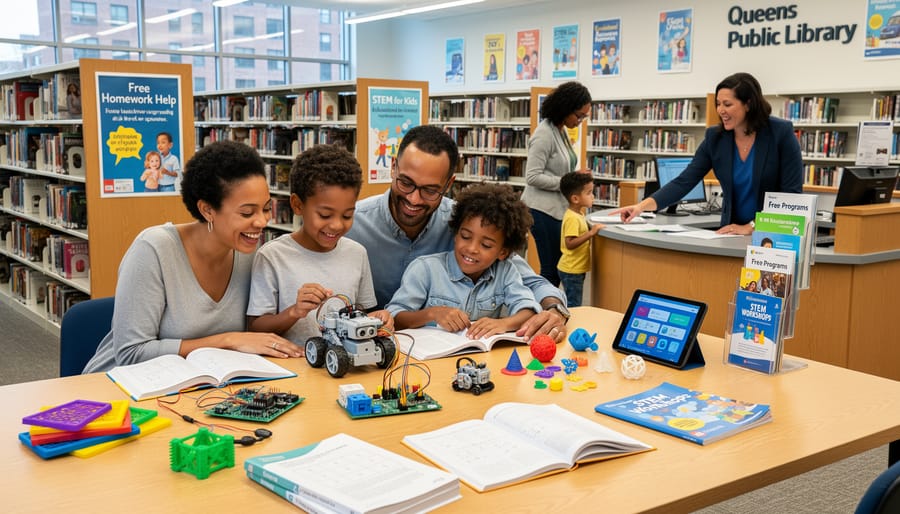
Start with the Queens Public Library system, it’s one of your most powerful free resources. Visit your nearest branch to apply for an educator card, which grants access to the library’s homeschool collection including manipulatives, STEM kits, and curriculum sets you can check out for weeks at a time. The Queens Library also offers free museum passes to institutions like the New York Hall of Science and Queens Museum, saving you admission costs while providing hands-on learning opportunities. Check the online catalog for science experiment kits, foreign language materials, and educational games that would cost hundreds to buy outright.
Next, contact the Queens Botanical Garden about their family education programs. They provide free seasonal workshops, plant starter kits, and naturalist-led sessions that fulfill science requirements while supplying you with materials to take home.
Watch for NYC Department of Education surplus sales, typically held quarterly. These events offer desks, chairs, whiteboards, art supplies, and educational materials at deeply discounted prices. Sign up for notifications through the DOE website to catch sale dates.
Join your neighborhood Buy Nothing group on Facebook. Queens families regularly offer gently used curriculum, manipulatives, art supplies, and educational toys. Post specific requests, other homeschoolers often have materials their children outgrew and prefer giving them to families who will use them rather than storing them indefinitely.
Step 3: Map Your Queens Retail Shopping Route
Start by mapping your shopping trip around Queens’ retail clusters to minimize travel time and maximize efficiency. The Rego Park area offers your highest concentration of major suppliers in a small radius. Target on Metropolitan Avenue and BJ’s Wholesale Club provide bulk school supplies, workbooks, and organizational tools at competitive prices. Park once at the Rego Center and walk between Target, Barnes & Noble, and nearby Michaels for art supplies and craft materials in a single two-hour window.
Note that AC Moore has closed its stores, so plan on Michaels or Blick Art Materials in Long Island City for craft needs. Barnes & Noble operates locations in Bay Terrace Shopping Center and Rego Park, both stocking educational workbooks, classic literature, and STEM activity kits.
For language learners, venture to Flushing’s Main Street corridor where Asian bookstores like Book Culture and specialty shops carry Mandarin, Korean, and Japanese learning materials often absent from mainstream retailers. Jackson Heights’ 74th Street area hosts Spanish-language bookstores and South Asian cultural shops with Hindi and Urdu resources.
Science-focused families should check Steve Spangler Science for online ordering (they ship quickly to Queens zip codes), or make the trip to American Science & Surplus in Brooklyn for hands-on lab equipment. Create a prioritized list organized by location clusters, tackle the furthest destination first, then work your way back toward home to minimize carrying time for heavy purchases.
Step 4: Compare Online Options and Shipping Logistics
Open three browser tabs, Amazon, Rainbow Resource, and Christianbook, and search identical items (your Saxon math workbook, that science lab supplies guide microscope, poetry anthology) to compare base prices. Rainbow Resource typically beats Amazon on curricula by 10-20%, but Amazon Prime’s two-day shipping to Queens zip codes (11101-11697) often justifies a few extra dollars when you need materials this week. Check each retailer’s shipping calculator with your exact Queens address; standard ground usually arrives in 3-5 business days borough-wide, while expedited options hit most neighborhoods next-day.
For heavy items like manipulative sets or year-long curriculum bundles, calculate per-pound shipping costs, sometimes a $4 higher product price with free shipping beats the “cheaper” option once you add $12 ground delivery. Compare online prices against in-store pickup at Queens Target, Barnes & Noble, or Michaels locations; many retailers now offer same-day online ordering with two-hour pickup windows, letting you skip shipping entirely while locking in online sale prices that don’t always appear in-store.
Step 5: Join Queens Homeschool Co-ops for Bulk Orders
Connecting with Queens homeschool co-ops gives you access to bulk pricing that individual families can’t match. Start by searching Facebook for “Queens homeschool co-op” or “NYC homeschool group” to find active communities. The Queens Homeschool Network and several faith-based groups coordinate annual curriculum orders, typically in May for fall delivery and November for spring semester.
Reach out to co-op coordinators in March or September to learn their ordering process. Most groups pool orders from publishers like Apologia, Math-U-See, and Memoria Press, securing 15-30% discounts unavailable to solo buyers. You’ll need to commit to your selections weeks before the deadline since groups can’t accommodate last-minute changes.
For science equipment and manipulatives, propose a sharing rotation with 3-4 families living near each other. A microscope, skeleton model, or geography puzzle set gets far more use when it circulates between households every six weeks. Create a simple spreadsheet tracking who has what and when items rotate.
Co-ops also coordinate bulk purchases of consumables, printer paper, art supplies, and laminating pouches, splitting warehouse club quantities that would overwhelm a single family’s storage space. This approach cuts costs while building relationships with families who understand your homeschooling journey.
Step 6: Organize and Store Your Supplies
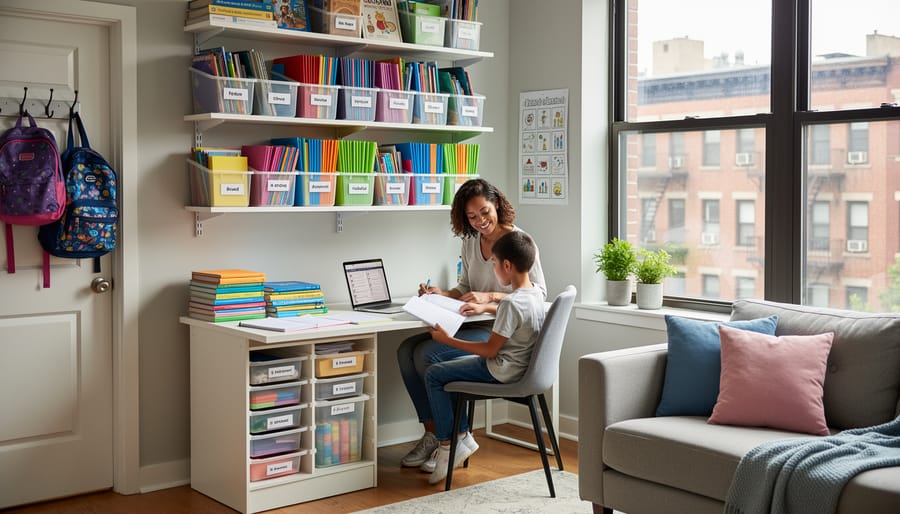
Once you’ve gathered your supplies, organizing them effectively becomes crucial in Queens homes where space comes at a premium. Most families work with limited square footage, whether in apartments or modest houses, so strategic storage prevents clutter and keeps materials accessible.
Start by designating a specific learning area, even if it’s just a corner of your living room or bedroom. Use vertical storage like wall-mounted shelves or over-the-door organizers to maximize floor space. Clear plastic bins work well for categorizing supplies by subject, label each container clearly so kids can find what they need without digging. Store current curriculum materials within arm’s reach and archive previous years’ work in less accessible spaces like high closets or under beds.
For families dealing with particularly tight quarters, consider rotating supplies seasonally. Keep only this quarter’s materials active and box up items for later units. This approach also helps you maintain accurate records for New York’s quarterly reporting requirements, since you’ll naturally review what you’ve used and what’s next.
Implement a simple checkout system where children return supplies to designated spots after each lesson. Many Queens homeschoolers find that homeschool storage solutions adapted from commercial classroom organizers work perfectly in home settings, creating independence while preventing the chaos of scattered materials across your apartment.
Queens-Specific Shopping Locations by Neighborhood
Flushing and Northeast Queens
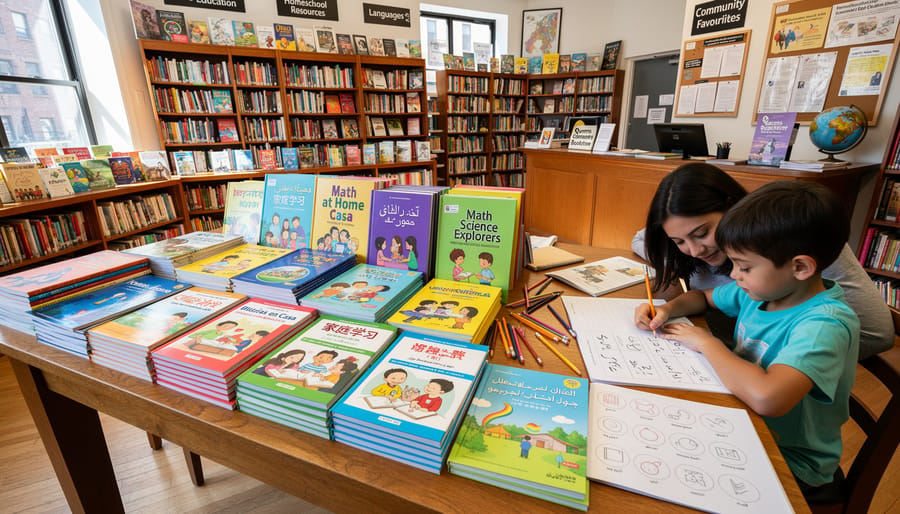
Flushing stands out as Queens’ premier destination for multilingual homeschool materials and STEM resources. The neighborhood’s numerous Asian bookstores along Main Street and Roosevelt Avenue stock comprehensive Mandarin and Korean language workbooks, math manipulatives following Singapore and Korean methodologies, and bilingual science texts that often exceed American grade-level standards. Book Culture and Kinokuniya offer curated education sections with materials rarely found elsewhere in New York.
The Flushing branch of Queens Public Library maintains one of the borough’s strongest STEM collections, including circulating robotics kits, coding resources, and advanced math materials. Educator cards here provide access to specialized teaching tools and curriculum guides.
Major retailers like Target and Staples cluster near the Main Street/Flushing subway hub, making bulk supply runs possible without a car. The 7 train provides direct access from western Queens, while Q13, Q15, and Q27 buses serve families throughout northeastern neighborhoods. This transit accessibility lets you combine bookstore browsing with practical supply shopping in a single efficient trip.
Jackson Heights and Elmhurst
Jackson Heights and Elmhurst form one of the most linguistically diverse neighborhoods in the world, making them exceptional hunting grounds for multilingual homeschool materials. Colombian, Mexican, and Ecuadorian bookstores along Roosevelt Avenue stock Spanish-language workbooks, readers, and cultural studies materials that mirror curricula from Latin American countries, often at lower prices than mainstream retailers. These same stores carry dual-language materials perfect for heritage language learning or ESL curricula.
South Asian grocers and bookstores near 74th Street offer Hindi, Urdu, Bengali, and Tamil educational materials, including math workbooks using different pedagogical approaches that can supplement American curricula. The Diversity Plaza area hosts rotating cultural festivals where vendors sell traditional craft materials, musical instruments, and geography resources representing dozens of countries, materials you won’t find in chain stores.
Independent bookstores like Librería Barco de Papel specialize in Spanish children’s literature across reading levels, while South Asian shops stock British-style educational materials that align well with classical education approaches. The Queens Library’s Elmhurst and Jackson Heights branches maintain extensive multilingual children’s collections and offer free cultural programming that complements homeschool social studies units.
Astoria and Long Island City
Astoria and Long Island City excel in art materials and cultural education resources. Utrecht Art Supplies on Steinway Street stocks professional-grade art materials at educational discounts, while Artist & Craftsman Supply in LIC offers bulk paper, paint sets, and drawing tools suitable for homeschool budgets. Both locations welcome families and can order specialty items within days.
The neighborhood’s transit advantage matters: the N/W trains connect you to Manhattan’s Museum Mile and specialized STEM retailers in under 20 minutes, expanding your sourcing options significantly without car dependency. For cultural studies, Greek bookstores along 31st Avenue carry authentic Greek language primers, mythology resources, and Mediterranean history materials rarely found in mainstream retailers. The Socrates Sculpture Park offers free outdoor art education programs that complement hands-on learning supplies you source locally.
Forest Hills and Rego Park
Forest Hills and Rego Park form Queens’ retail powerhouse for homeschool shopping, with the Junction Boulevard corridor offering unprecedented concentration of major chains. Target at Queens Place Mall stocks extensive school supplies year-round, from basic notebooks to manipulatives and STEM kits, with free drive-up pickup that’s rare in NYC. Barnes & Noble across the parking lot carries comprehensive homeschool curriculum sections including Saxon Math, Evan-Moor workbooks, and educational games. Michaels craft store handles art supplies, poster boards for science fair projects, and seasonal educational décor.
This area’s parking availability makes it ideal for bulk shopping trips, you can load curriculum packages, paper reams, and storage bins without subway logistics. The Queens Boulevard Costco (membership required) offers unbeatable prices on printer paper, art supplies, and manipulatives when buying in quantity. Most stores here participate in back-to-school sales in July and August, though homeschoolers should shop these early before stock depletes.
How to Verify You Have Everything You Need
Before your first homeschool day begins, run a thorough verification process to catch gaps while you still have time to fill them. Start by pulling out your filed IHIP (Individualized Home Instruction Plan) and cross-referencing every subject area against your assembled supplies, you need materials that actually support the curriculum plan you submitted to your district, not just generic educational items.
Test your hands-on materials during this verification phase, especially science kits, math manipulatives, and art supplies. Open boxes, check for missing pieces, and confirm instructions are included. Queens families working in smaller spaces should physically set up their learning station now to verify that your storage solutions actually work and materials are accessible without daily frustration.
Use this checklist to confirm you’re truly ready:
- Cross-reference all supplies against your submitted IHIP subject areas and quarterly reporting requirements
- Unbox and test manipulatives, science kits, and tech-dependent materials to confirm they’re complete and functional
- Verify your storage system keeps materials organized and accessible in your available space
- Confirm your budget tracking method captures all purchases for potential tax documentation
- Schedule your mid-year supply review now (typically January) to reassess what’s working and what needs replacement
Track your verification findings in your ultimate homeschool planner so you have a record of what you checked and when. If you discover missing items, prioritize by what you’ll need in the first month versus what can wait, you don’t need April’s spring unit supplies sorted in September. Consider doing a practice homeschool day with all materials before your official start date to surface any workflow issues while nearby Queens stores are still accessible for quick replacements.
Common Questions About Queens Homeschool Supply Shopping
Queens families sourcing homeschool supplies face unique local considerations, from navigating NYC tax policies to maximizing limited apartment space. These questions come up repeatedly in Queens homeschool circles and deserve practical, borough-specific answers.
Does NYC have sales tax holidays that can save money on homeschool supplies?
New York State typically holds a sales tax exemption week in late August or early September for clothing, footwear under $110, and school supplies under $20 per item. This applies throughout Queens and can yield meaningful savings on basic supplies, though curriculum materials generally exceed the price threshold.
Which Queens library branches have the strongest homeschool resources?
Flushing, Central Library in Jamaica, and Forest Hills branches maintain particularly robust education collections and STEM kits. All Queens Public Library locations honor educator cards that extend borrowing limits, which matters when you’re checking out materials for multiple subjects simultaneously.
How do I store homeschool supplies in a small Queens apartment?
Use vertical space with over-door organizers and wall-mounted shelves, keep only current-quarter supplies accessible while rotating others into storage bins under beds, and repurpose kitchen carts as mobile learning stations that wheel away when not in use.
Where can I find secular curriculum materials in Queens?
Target and Barnes & Noble carry mainstream secular workbooks, Queens library branches stock non-religious resources, and online retailers like Rainbow Resource clearly categorize secular options. Local homeschool groups in diverse neighborhoods like Jackson Heights tend toward inclusive, non-sectarian resource sharing.
Budget expectations vary widely based on grade level and approach. Some Queens families spend under $300 annually by leveraging library resources and free online materials, while others invest $800-$1,500 for comprehensive packaged curricula. Start with your curriculum’s required list, price-check across multiple retailers, and remember that manipulatives and lab equipment often have one-time costs you’ll use for years.
Connecting with other Queens homeschoolers accelerates your supply strategy considerably. Search Facebook for “Queens Homeschool” groups, attend NYC Homeschoolers meetups that draw Queens families, or ask your local library staff if they know of parent groups using their meeting rooms. Once you find even two or three nearby families, coordinate bulk orders, swap outgrown materials, and share specialized equipment like microscopes or geography sets. The Queens homeschool community is surprisingly active once you tap into it, and experienced families readily share their supplier recommendations and shopping shortcuts.
Queens’ unmatched retail landscape, world-class library network, and cultural richness make it one of the most supply-friendly boroughs for homeschooling families anywhere. You’ve got neighborhood bookstores carrying materials in dozens of languages, major retailers clustered for efficient shopping runs, and library branches stocked with STEM kits and museum passes, all within a subway ride or short drive.
Start with what’s free. Queens Public Library, the botanical garden programs, and local co-op networks can cover a surprising amount of your curriculum needs before you spend a dollar. Then layer in strategic purchases from retailers near you, timing your trips around sales and coordinating with other families for bulk orders.
Revisit your supply strategy each quarter as you prepare your reports for the school district. What worked in September might need adjustment by January, and quarterly check-ins keep you from overbuying while ensuring you meet New York’s documentation requirements.
Smart sourcing isn’t about finding every resource immediately. It’s about building a sustainable system that supports your child’s learning without straining your budget or overtaking your living space. Queens gives you the tools, use them strategically, and you’ll set your homeschool up for long-term success.